Leave Your Message
Choosing Eco Friendly Insulators for global sourcing requires more than comparing recycled content or attractive sustainability claims. A reliable decision must connect thermal performance, moisture control, fire safety, indoor air quality, transportation distance, and end-of-life recovery. Climate changes the answer. A fiber insulation that performs well in a dry, cold warehouse may struggle in a humid coastal project. The details matter: a compressed pallet, a damaged vapor barrier, or an unverified density can change real-world performance.
Joseph Lstiburek, a respected building-science expert, has emphasized, “The building enclosure is a system, not a collection of parts.” This principle should guide every sourcing review. Eco Friendly Insulators should be evaluated alongside membranes, framing, ventilation, and installation practices. Look for transparent technical data, tested R-values, moisture behavior, low-emission documentation, and credible environmental product declarations. Supplier audits also matter. A polished brochure cannot replace factory evidence, batch records, and installation guidance.
There is no perfect material.
Global buyers should compare suppliers using the same checklist, while allowing regional requirements to remain visible. Recycled cellulose, mineral wool, sheep wool, wood fiber, and aerogel-based products each offer different benefits and limitations. Some require more careful moisture protection. Others have higher shipping impacts or limited recycling routes. That is where judgment becomes necessary. A practical choice may not be the newest product. It may be the material that local installers understand, suppliers can document, and buildings can maintain for decades. Still, assumptions deserve review. Sustainability claims can weaken when transport, packaging, replacement cycles, and jobsite waste are ignored.
How to Choose Eco-Friendly Insulators for Global Sourcing?
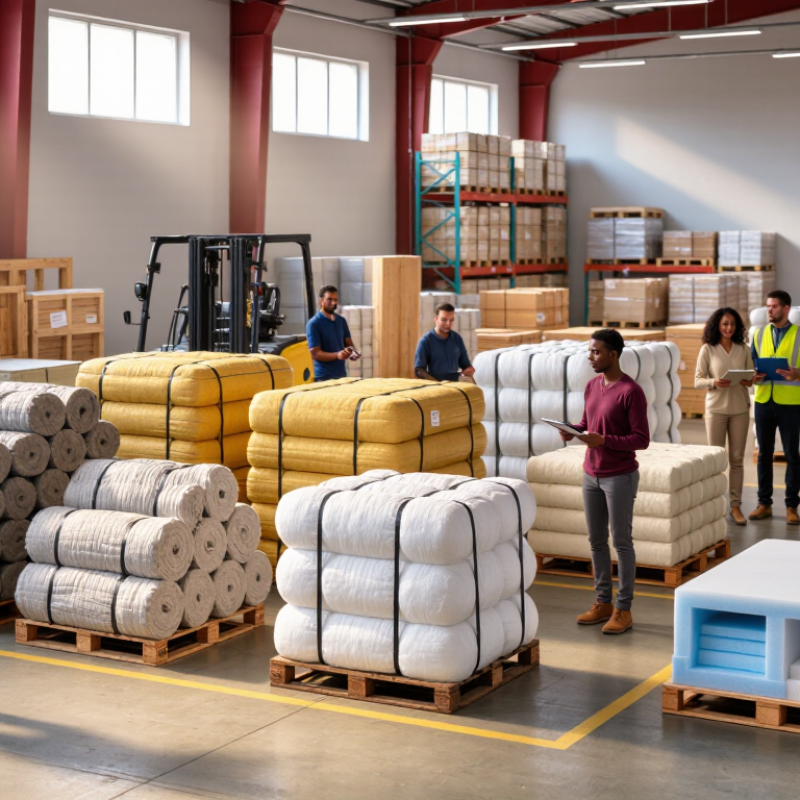
Eco-friendly insulation should be defined by function, not appearance. Start by identifying the building’s thermal, acoustic, and moisture-control needs. A cold-storage wall requires different performance than a residential roof. Measure the required R-value for the local climate and assembly design. Higher R-value is not always better. Excess thickness may increase cost, shipping weight, and material use. Check laboratory data, installation conditions, and performance after aging.
Carbon footprint needs a wider view. Compare raw material extraction, manufacturing energy, packaging, transport distance, and end-of-life options. A lightweight product shipped across oceans may outperform a heavier local material in one project. That result cannot be assumed. Request verified environmental data, recycled content details, and manufacturing energy information. Look for transparent testing methods and traceable supply records. Ask whether workers and suppliers follow documented environmental and safety procedures.
Experience shows that moisture mistakes can damage an otherwise efficient insulation system. Review water absorption, vapor movement, fire performance, and compatibility with nearby materials. Installation waste also matters. Products that require frequent cutting can create hidden carbon and disposal costs. The assessment is not perfect. Data may be incomplete, inconsistent, or based on different boundaries. Record every assumption, then test the decision against real project conditions. A practical sourcing scorecard can combine R-value, service life, carbon footprint, logistics, and installation risk. Keep it measurable. Recheck it before purchasing.
| Insulation Type | Primary Function | Typical R-Value per inch |
Approx. Thickness for R-20 |
Indicative Embodied Carbon kg CO₂e/m² at R-20 |
Moisture, Fire, and Durability Profile | Global Sourcing Considerations | Eco-Friendly Screening |
|---|---|---|---|---|---|---|---|
| Cellulose Fibre | Loose-fill or dense-pack insulation for attics, roofs, walls, and retrofit cavities. | 3.2–3.8 | Approx. 5.3–6.3 in (135–160 mm) |
0.5–5 | Good air-sealing when densely installed; hygroscopic; generally requires fire and pest treatment. Performance depends strongly on installation density and moisture control. | Prioritize verified recycled-paper content, low-dust processing, treatment disclosure, and packaging with high recycled content. | Very strong |
| Fiberglass | Cost-effective thermal insulation for framed walls, roofs, ceilings, and service spaces. | 2.9–3.8 | Approx. 5.3–6.9 in (135–175 mm) |
2–10 | Non-combustible glass fibres; does not absorb liquid water readily, but thermal performance falls if compressed or poorly fitted. Requires careful handling during installation. | Compare recycled glass content, binder chemistry, manufacturing energy, density, and local availability. Flat-pack or compressed packaging can reduce freight volume. | Good with recycled content |
| Mineral Wool | Thermal, acoustic, and fire-resistance insulation for walls, roofs, floors, and industrial applications. | 3.0–4.2 | Approx. 4.8–6.7 in (120–170 mm) |
6–35 | Typically non-combustible and dimensionally stable; good acoustic performance. Water-repellent grades resist temporary moisture, but assemblies still require drainage and drying. | Assess recycled mineral content, melting energy, product density, pallet efficiency, and verified fire classification for the destination market. | Good for fire and acoustic duty |
| Expanded Polystyrene (EPS) | Rigid boards for foundations, floors, walls, roofs, and insulated panels. | 3.6–4.2 | Approx. 4.8–5.6 in (120–140 mm) |
5–18 | Low water absorption compared with fibrous products; combustible and must be protected by an approved thermal or fire barrier. Stable when correctly detailed. | Check blowing-agent type, recycled content, fire performance, bead density, dimensional tolerances, and local collection or recycling infrastructure. | Moderate |
| Extruded Polystyrene (XPS) | High-compressive-strength insulation for below-grade walls, slabs, inverted roofs, and cold environments. | 4.5–5.0 | Approx. 4.0–4.4 in (100–112 mm) |
12–40 | Low water absorption and high compressive strength; combustible and requires suitable protection. Long-term R-value can be affected by blowing-agent diffusion and aging. | Request blowing-agent disclosure and a product-specific environmental product declaration. Use only where its moisture or compressive-strength function justifies the higher footprint. | Use selectively |
| Closed-Cell Spray Polyurethane Foam | Air sealing and high-performance insulation in irregular cavities, roofs, foundations, and difficult retrofit areas. | 6.0–7.0 | Approx. 2.9–3.3 in (73–84 mm) |
5–45+ | Excellent air sealing and moisture resistance when correctly installed; combustible and installation-sensitive. Blowing-agent global-warming potential can substantially change its carbon footprint. | Require blowing-agent type, cured-density data, installer qualifications, ventilation requirements, and a product-specific carbon declaration. Avoid selecting solely by R-value per inch. | Highly specification-dependent |
| Wood Fibre Board | Breathable wall and roof insulation, exterior continuous insulation, and thermal-mass support. | 3.5–4.0 | Approx. 5.0–5.7 in (125–145 mm) |
−10 to +15* | Moisture-buffering and vapour-open in suitable assemblies; can be combustible and must be protected according to local fire design. Requires careful storage to prevent wetting. | Verify responsibly sourced fibre, resin or binder content, moisture limits, pest treatment, transport distance, and whether biogenic carbon is reported separately. | Strong when certified and durable |
| Sheep Wool | Flexible batt or quilt insulation for framed walls, roofs, and interior retrofit applications. | 3.5–3.8 | Approx. 5.3–5.7 in (135–145 mm) |
−5 to +20* | Can buffer humidity and provide good acoustic comfort; requires protection against moths, moisture, and fire according to the formulation and local code. | Check animal-welfare policy, treatment chemicals, wool origin, recycled fibre percentage, odour controls, and consistency of supply across seasons. | Potentially strong; verify LCA |
Data interpretation: R-values are typical product ranges expressed in h·ft²·°F/Btu per inch and vary with density, temperature, moisture, and installation quality. Thickness values are simple estimates for R-20 and do not replace local building-code calculations.
Carbon-footprint boundary: The embodied-carbon figures are indicative cradle-to-gate screening ranges in kg CO₂e/m² for approximately R-20 of insulation. They exclude transport to the project, installation, maintenance, end-of-life, and operational-energy savings. Actual results should be taken from a current, product-specific environmental product declaration using the same PCR and declared unit.
*Biogenic carbon: Negative or low values may occur when temporary biogenic carbon storage is reported. This does not automatically mean permanent carbon removal; compare the same accounting rules, service life, and end-of-life assumptions before sourcing.
Recommended sourcing evidence: Product technical data sheet, thermal-test method such as ASTM C177/C518 or EN 12667, fire classification, moisture and compressive-strength data where relevant, recycled or renewable-content declaration, and a third-party verified EPD aligned with ISO 14025 and EN 15804.