Leave Your Message

Best Switchgear Insulators in China for Global Buyers

Choosing Switchgear Insulators from China involves more than comparing catalog prices or browsing polished factory photos. Global buyers need components that maintain electrical insulation and mechanical support under their equipment’s actual operating conditions. A compact indoor panel and a coastal installation face different demands. Material selection matters. Epoxy resin, porcelain, and composite designs each require evaluation against voltage, loading, temperature, and environmental exposure.

A useful supplier assessment starts with the drawing, the application, and evidence that the proposed insulator meets specified requirements. Check rated voltage, creepage distance, mounting dimensions, and mechanical strength before discussing order quantities. For epoxy components, ask how the manufacturer controls casting voids and verifies curing quality. Where relevant, request partial discharge results and traceable test reports tied to the offered design. Documentation needs scrutiny. A certificate alone cannot confirm that every production batch will perform consistently. Applicable IEC standards can guide the review, but requirements depend on the equipment, destination market, and purchase specification.

The best Chinese supplier for one buyer may be unsuitable for another. A distributor ordering replacement parts may prioritize dimensional consistency and dependable packaging. An equipment manufacturer may need engineering support, drawing revisions, and controlled production changes. Even a promising sample leaves questions about repeat orders, lead times, and how defects are handled. That uncertainty deserves attention before a long purchasing commitment. This guide examines how global buyers can compare Switchgear Insulators using technical suitability, manufacturing evidence, and practical purchasing criteria. The aim is a defensible shortlist, with clear reasons behind each choice.
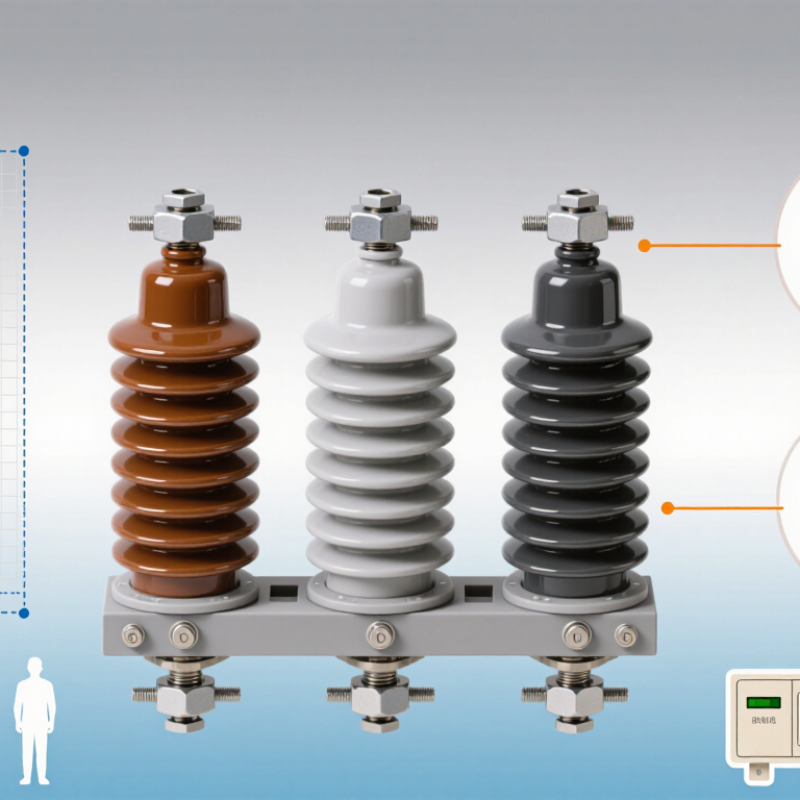
Best Switchgear Insulators in China for Global Buyers

Switchgear Insulators: Functions and Key Applications

Switchgear insulators support live conductors and prevent current from reaching grounded enclosures. Their geometry provides clearance through air and creepage distance along insulating surfaces. Both matter. Inside a medium-voltage cabinet, a support insulator holds a busbar against mechanical forces during normal operation and faults. Bushings carry conductors through grounded barriers while maintaining electrical separation. The IEA’s Electricity 2024 report recorded 2.2% global electricity demand growth in 2023. It projected average annual growth of 3.4% through 2026, reinforcing the need for dependable distribution equipment.

Typical applications include industrial substations, renewable-energy collection systems, commercial distribution rooms, and utility switching stations. Material selection depends on the installation. Cast-resin supports commonly serve indoor switchgear, where compact dimensions and mechanical rigidity matter. Porcelain and composite designs also serve applications requiring suitable weather resistance and insulation performance. Surface conditions matter. Dust combined with condensation can create conductive paths, increasing leakage current and flashover risk. A coastal installation therefore needs pollution assessment, rather than an insulation choice based solely on nominal voltage.

For global buyers sourcing from China, “best” should mean documented suitability for the intended switchgear assembly. IEC 62271-200 covers AC metal-enclosed switchgear above 1 kV and up to 52 kV. Assembly compliance, however, cannot be established from an individual insulator’s test certificate alone. Request drawings, material specifications, batch traceability, and relevant dielectric and mechanical test records. A smooth surface looks reassuring, but appearance cannot establish freedom from internal voids. Buyers should also verify mounting tolerances and conductor loads; these practical details are sometimes underestimated.
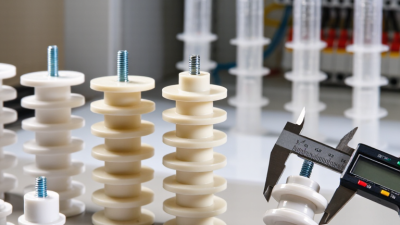
Main Insulator Types, Materials, and Manufacturing Processes

Global electricity demand rose 4.3% in 2024, according to the International Energy Agency’s Electricity 2025 report. That growth adds context for global buyers assessing switchgear insulation capacity in China.

Type matters. Support insulators hold busbars in position, while bushings carry conductors through grounded partitions. Spouts and contact boxes insulate connection points around withdrawable circuit breakers.

Selection starts with rated voltage, mechanical loading, installation geometry, and exposure to moisture or conductive dust.

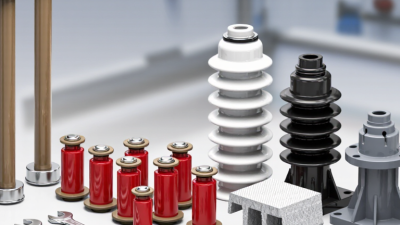
Epoxy resin Epoxy resin suits complex indoor components because manufacturers can mold ribs, mounting holes, and embedded metal inserts together. Mineral fillers help control shrinkage and thermal expansion, although performance depends on formulation and processing.

Porcelain offers weather resistance but adds weight and can chip during handling. Silicone rubber provides hydrophobic surfaces for exposed applications, often around a reinforced core.

Material alone proves little. For pollution assessment, IEC TS 60815-1:2008 gives reference unified specific creepage distances ranging from 22.0 to 53.7 mm/kV across pollution classes. These figures require application-specific interpretation; they are not universal dimensions for every indoor component.

Manufacturing deserves close scrutiny.

Epoxy production commonly involves vacuum mixing, degassing, automatic pressure gelation or vacuum casting, and controlled curing. Trapped air near an insert can concentrate electrical stress despite an apparently flawless exterior.

Porcelain production requires forming, drying, glazing, and firing; silicone components require controlled molding and interface preparation.

Ask Chinese suppliers for batch traceability, dimensional inspection records, and applicable dielectric and partial-discharge test results.

One uncomfortable limitation remains: a passing sample does not establish consistency across every mold cavity or production batch.

Performance Requirements and International Compliance Standards

Best Switchgear Insulators in China for Global Buyers
Performance Requirements and International Compliance Standards

For global buyers sourcing switchgear insulators from China, verified electrical performance deserves more attention than polished surfaces. Evidence matters. IEC 62271-1 specifies normal service conditions, including ambient temperatures up to 40°C and installation altitudes up to 1,000 metres. Above this altitude, reduced air density can affect external insulation performance and require insulation coordination adjustments. Buyers should provide operating voltage, installation altitude, humidity, and contamination conditions before requesting quotations.

IEC 62271-200:2021 provides concrete benchmarks for alternating-current metal-enclosed switchgear above 1 kV and up to 52 kV. For a common 12 kV insulation level, rated withstand values include 28 kV power-frequency and 75 kV lightning impulse. These values describe equipment insulation requirements; they do not automatically qualify an individual support insulator. Check the setup. Request reports identifying electrode geometry, mounting arrangement, test voltage, and specimen traceability. Partial-discharge measurements should follow IEC 60270, with acceptance limits defined by the applicable equipment specification.

Material quality also needs physical evidence. Inspect epoxy samples for voids, cracks around embedded inserts, and dimensional variation that could reduce electrical clearances. Ask for mechanical load results matching the installed bending direction and fastening arrangement. One successful sample proves less than buyers sometimes assume. A dry laboratory test may overlook condensation or contamination encountered inside an operating cabinet. Independent laboratory reports should identify the tested model and accreditation scope, while production records should demonstrate consistent manufacturing.

Criteria for Comparing Switchgear Insulator Manufacturers in China

Comparing Chinese switchgear insulator manufacturers starts with evidence that matches your equipment’s operating conditions. The International Energy Agency’s Global Energy Review 2025 reports that global electricity demand rose 4.3% in 2024. That growth provides market context, but cannot establish any supplier’s quality. Check the details. Request drawings showing mounting dimensions, conductor interfaces, creepage distances, and dimensional tolerances. A quotation stating only “24 kV epoxy insulator” leaves too much unspecified.

Technical comparisons should connect test evidence to the exact product offered. IEC 60660 covers indoor organic-material post insulators for AC systems above 1 kV through 300 kV. Ask whether its scope fits your application. Request applicable power-frequency withstand, lightning impulse, mechanical strength, and partial-discharge test results. IEC 60270 provides partial-discharge measurement methods; it does not establish one universal acceptance limit for every insulator. Demand traceable records. Reports should identify samples, test conditions, dates, and the laboratory responsible. For coastal installations, assess pollution exposure and condensation instead of comparing creepage distance alone.

Manufacturing consistency deserves equal attention. Ask how the factory controls resin mixing, vacuum casting, curing temperatures, and batch identification. Request recent inspection records rather than relying entirely on selected samples. A polished sample can conceal inconsistent production, although one rejected batch does not prove systemic failure. This comparison remains imperfect: laboratory results cannot reproduce every service environment. Compare sample approval lead times, packaging protection, replacement terms, and shipment inspection arrangements. Record unresolved gaps, especially when the supplier’s report covers a different geometry or resin formulation.

Global Purchasing: Supplier Verification, Quality Checks, and Logistics

Buying switchgear insulators from China starts with verifying who actually manufactures the parts. Request a business license, factory address, and a live video walkthrough of molding, curing, and inspection areas. Check the details. A quality certificate alone cannot establish whether a supplier controls production or simply purchases finished components from another factory. Ask for recent test reports identifying the product model, test method, laboratory, and date. Verify laboratory accreditation and its testing scope through the issuing body.

Quality checks should follow your equipment specifications, including rated voltage, creepage distance, mechanical loads, and installation dimensions. For epoxy insulators, inspect mounting inserts, surface cracks, flash marks, and dimensional consistency against approved drawings. Request electrical and mechanical testing appropriate to the component and intended application, with acceptance criteria agreed before production begins. Keep approved samples. They help resolve disputes over dimensions and finish, although one good sample says little about consistency across later batches. A practical limitation remains: visual inspection cannot reveal every internal void or bonding defect.

Logistics planning should begin before the purchase order is signed. Specify individual cushioning, protected threaded inserts, moisture barriers where appropriate, and cartons labeled by batch. Ask the supplier to photograph packed goods and record carton dimensions before freight booking. Compare quotations using the same named delivery location and the same agreed trade terms, checking which destination charges remain payable. Confirm tariff classification with a qualified customs broker for your destination. Leave time for inspection, document corrections, and replacement parts; the cheapest freight quotation may still create avoidable installation delays.

Best Switchgear Insulators in China for Global Buyers - Global Purchasing: Supplier Verification, Quality Checks, and Logistics

A supplier-neutral purchasing matrix for evaluating switchgear insulators sourced from China. Selection should follow the intended equipment design, verified test evidence, and destination requirements.

Supplier Verification, Product Qualification, Quality Control, and Shipping Requirements
Purchasing Stage Evaluation Dimension Verified Technical or Commercial Basis Evidence to Request Buyer Acceptance Check
Supplier Verification Legal identity and manufacturing role Chinese business registration records identify the registered entity and its Unified Social Credit Code. A seller may be a manufacturer or a trading company. Business license, registration record, factory address, production process list, and disclosure of subcontracted operations. Match the contracting entity to registration records and confirm where molding, curing, machining, and final inspection take place.
Supplier Verification Quality management system ISO 9001 specifies quality management system requirements. Certification does not establish that an individual insulator meets its electrical or mechanical specification. Current certificate, certification scope, covered production sites, and certificate verification details. Verify certificate validity and confirm that its scope and site cover the manufacturing activities relevant to the order.
Product Qualification Insulator material and installation environment IEC 60660 covers tests on indoor post insulators of organic material for systems with nominal voltages above 1,000 V. IEC 60168 covers ceramic or glass post insulators for indoor and outdoor systems above 1,000 V. Material specification, installation conditions, product drawing, and a test report identifying the applicable product standard. Select the standard according to material, insulator construction, and service environment. Confirm applicability before accepting a compliance claim.
Product Qualification Switchgear voltage and insulation coordination IEC 62271-1 provides common specifications for high-voltage switchgear and controlgear. IEC 62271-200 covers AC metal-enclosed equipment rated above 1 kV and up to and including 52 kV. Equipment rated voltage, specified insulation levels, service conditions, and dielectric qualification evidence for the relevant assembly. Match the insulator to the equipment's insulation requirements. A component test alone does not establish compliance of the complete switchgear assembly.
Product Qualification Dimensions and connection interfaces Mounting centers, insert threads, conductor position, and tolerances affect assembly fit and electrical clearances. IEC 60273 specifies characteristics of certain indoor and outdoor post insulators above 1,000 V. Approved dimensional drawing, thread specifications, tolerance requirements, and first-article inspection results. Inspect critical dimensions against the approved drawing and verify fit with the intended busbar and mounting arrangement.
Quality Checks Power-frequency and impulse withstand Dielectric test levels depend on the applicable equipment or product standard and the specified insulation level. IEC 60060-1 addresses high-voltage test techniques. Reports showing test voltage, waveform or frequency, duration where applicable, specimen identification, arrangement, and result. Use the agreed standard and specification as the acceptance basis. Do not infer a withstand level from physical size or a product description.
Quality Checks Partial discharge performance IEC 60270 addresses charge-based partial discharge measurement. The applicable product standard or purchase specification must establish the test conditions and acceptance limit. Applied test voltage, measured apparent charge, background noise, calibration information, and the agreed acceptance criterion. Compare results only when test conditions are equivalent. Specify the required limit and measurement procedure in the purchase documents.
Quality Checks Mechanical strength and inserts Cantilever, tensile, torsional, and compressive loads depend on the insulator design and installation. Connection tightening torque must suit the insert and component design. Specified load ratings, relevant mechanical test reports, insert details, and installation torque instructions. Check the load direction and mounting arrangement against the intended service. Obtain approved installation torque values.
Product Qualification Outdoor pollution and creepage distance The IEC 60815 series addresses selection and dimensioning of high-voltage insulators for polluted conditions. Required creepage depends on pollution severity and the applicable design method. Site pollution assessment, insulator profile, measured creepage distance, material details, and selection rationale. Apply the relevant part of IEC 60815 where appropriate. Confirm altitude and clearance requirements separately; creepage alone is insufficient.
Quality Checks Traceability and production inspection Batch identification links finished components to manufacturing and inspection records. ISO 2859-1 provides sampling procedures for inspection by attributes. Batch markings, material records, inspection plan, defect classifications, and agreed sampling parameters where sampling is used. Define inspection scope and acceptance rules before production. Sampling acceptance does not guarantee that every unit is defect-free.
Quality Checks Laboratory competence and report relevance ISO/IEC 17025 specifies requirements for testing and calibration laboratory competence. Accreditation applies to a defined scope of activities. Complete test report, laboratory accreditation scope, specimen identification, tested drawing revision, and test method. Check that the relevant test falls within the accredited scope when accredited testing is required, and that the tested design represents the purchased product.
Logistics Transport packaging and wood treatment Insulators require protection against impact and movement. ISPM 15 regulates qualifying wood packaging material used in international trade; processed wood such as plywood is generally exempt. Packing specification, internal supports, packing photographs, package weights and dimensions, and applicable ISPM 15 marks. Confirm that packaging prevents component contact and protects mounting interfaces. Check wood packaging requirements for the destination.
Logistics Customs classification and import documents HS heading 8546 covers electrical insulators of any material. Classification depends on the actual article; destination tariff subdivisions, duty rates, and import measures vary. Commercial invoice, packing list, transport document, product description, proposed tariff code, and origin documentation when required. Confirm classification and destination requirements with the importer or customs broker before shipment.
Logistics Delivery terms and transit insurance Incoterms® 2020 allocates delivery responsibilities, costs, and risk. FCA can be used for any transport mode; FOB is for sea and inland waterway transport. CIF and CIP impose seller insurance obligations. Chosen rule, precise named place or port, freight scope, insurance terms where applicable, and shipment schedule. State the rule, named location, and “Incoterms® 2020” in the contract. Confirm risk transfer and insurance coverage before dispatch.