Leave Your Message

Who Are the Top Composite Insulator Suppliers in China?

China’s composite-insulator market includes established manufacturers and specialized exporters serving transmission, distribution, and railway projects. This introduction to the top Composite Insulator Suppliers looks beyond company names. It considers product design, manufacturing consistency, testing capability, and support after delivery. These details matter when an insulator must withstand rain, pollution, ultraviolet exposure, and mechanical loads on a real line.

Dr. Ravindra S. Gorur, an electrical-insulation researcher, has studied how insulation performs under electrical and environmental stress. A useful paraphrase of his research is: “Reliable insulation depends on performance under real service conditions, not appearance alone.” That principle helps frame supplier comparisons. Buyers can examine silicone-rubber housing, fiberglass core materials, end-fitting quality, and documented test results. They can also ask how production batches are inspected and how technical questions are handled. A polished brochure is not enough.

No supplier is perfect. Even strong manufacturers may differ in product range, lead times, export experience, or responsiveness. A careful shortlist should match the supplier’s verified capabilities to the project’s voltage class, climate, and installation needs. Request current test documentation and clarify specifications before comparing prices. Small details count, such as consistent sheds, clean bonding at the end fittings, and traceable product records. This guide offers a practical starting point, while recognizing that rankings depend on evidence and project requirements.
Who Are the Top Composite Insulator Suppliers in China?

Composite Insulators: Definition, Structure, and Applications

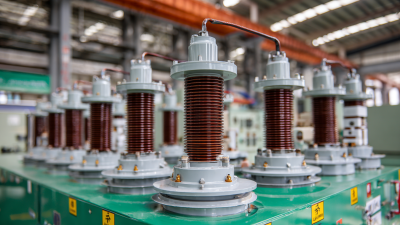
Composite insulators are load-bearing components used on overhead power lines. Unlike porcelain or glass units, they combine a glass-fibre-reinforced polymer core, a polymer housing with weather sheds, and metal end fittings. The core carries mechanical loads. The sheds extend the leakage path and help reduce flashover risks in wet or polluted conditions. IEC 61109 specifies requirements for composite suspension and tension insulators on overhead lines above 1 kV. Small parts matter.

The structure is compact, but its interfaces need careful attention. Moisture entering around an end fitting can damage the core. UV exposure and contamination can also affect the housing over time. Silicone rubber is widely used for its water-repellent surface, but performance depends on material quality, workmanship, and inspection. That is not a guarantee. Field checks still matter.

These insulators serve transmission and distribution lines, especially where lower weight, difficult access, or pollution shapes design choices. The IEA’s 2023 report, Electricity Grids and Secure Energy Transitions, estimates that 80 million kilometres of grids must be added or refurbished by 2040—roughly the length of today’s global grid network. This expansion supports demand for durable components, but no single material fits every climate or load. Selection should match electrical, mechanical, and environmental requirements, not weight alone.

Overview of China’s Composite Insulator Industry

Who Are the Top Composite Insulator Suppliers in China?
Overview of China’s Composite Insulator Industry

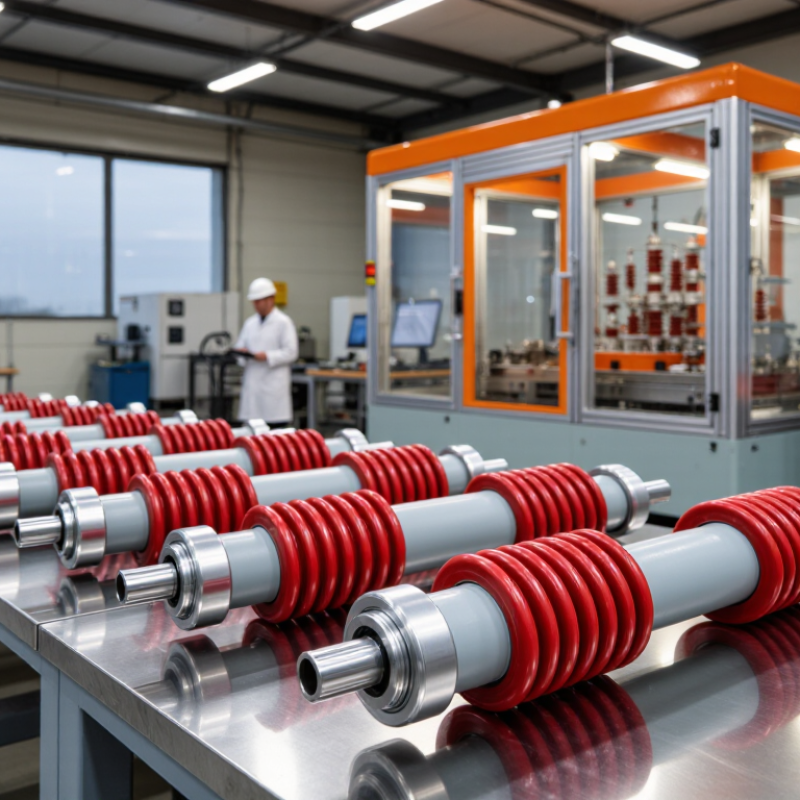
China’s composite insulator industry serves transmission, distribution, and railway networks. Products commonly combine a fiberglass-reinforced polymer core with silicone rubber sheds and metal end fittings. The sheds help limit leakage current in wet or polluted conditions. Performance still depends on design, materials, and careful manufacturing. Details matter. Factories may differ in molding control, interface sealing, fitting assembly, and inspection practices. A neat product photo cannot show these differences.

Tips: Match the insulator’s voltage class and mechanical load to the project specification. Check whether test reports cover the relevant design and production batch. Ask how the supplier controls core-to-fitting assembly and sealing. These questions are practical, not just paperwork.

For buyers comparing Chinese suppliers, evaluate technical documents alongside production capability and quality records. Consider local conditions, such as coastal salt, industrial dust, heavy rain, or sharp temperature changes. Request clear information about routine tests and applicable type tests, then confirm that the offered design matches the installation. A specification can look complete yet overlook a real site condition; I would treat that as a useful reminder to review assumptions early. Supplier rankings alone rarely reveal how well a product fits a particular network.

Who Are the Top Composite Insulator Suppliers in China? — Overview of China’s Composite Insulator Industry

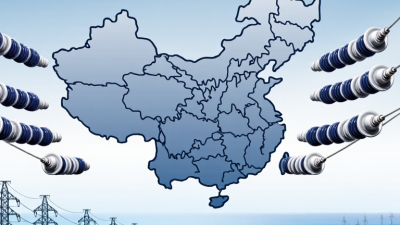
This chart shows selected nominal AC grid voltage levels used in China’s transmission network. Composite insulators are used across transmission applications; the values shown are voltage classes, not supplier rankings, production figures, or market shares.

Leading Composite Insulator Suppliers in China

Leading Composite Insulator Suppliers in China

China’s leading composite insulator suppliers are best assessed by engineering capability, production consistency, and verified field performance—not by unsubstantiated rankings. Public data rarely provides a reliable, like-for-like supplier league table. The International Energy Agency’s 2023 report, Electricity Grids and Secure Energy Transitions, estimates that 80 million kilometres of grids must be added or refurbished worldwide by 2040. That expansion increases demand for dependable line components, including composite insulators.

For buyers, inspect the silicone-rubber sheds, fibreglass-reinforced core, and metal end fittings closely. Ask for mechanical load results, electrical testing records, and evidence of resistance to pollution and ageing. Details matter. A neat sample does not prove stable output across a full production run. Request batch traceability and clarify how the supplier handles inspection failures. Where possible, review references from operating lines with comparable voltage, climate, and contamination levels. Chinese suppliers serve varied domestic and export projects, but technical documents still need careful review. Some specifications look complete at first glance. Check test conditions, not just headline values.

Who Are the Top Composite Insulator Suppliers in China? - Leading Composite Insulator Suppliers in China

The table below provides objective benchmarks for evaluating composite insulator suppliers. It does not rank or identify individual companies or brands.

Evaluation Dimension Factual Benchmark Why It Matters Evidence to Request
Overhead-line insulator standards IEC 61109 covers composite suspension and tension insulators for AC overhead lines with a nominal voltage above 1,000 V. Confirms that product design and testing address the relevant overhead-line insulator category. Applicable standard declarations, type-test reports, and product drawings identifying the tested design.
General polymeric-insulator requirements IEC 62217 specifies general definitions, test methods, and acceptance criteria for polymeric insulators used in indoor and outdoor service. Provides a general framework for assessing polymeric insulating materials and design performance. Test documentation showing the product family, specimen configuration, test methods, and results.
Line-post insulators IEC 61952 addresses composite line-post insulators for AC systems with a nominal voltage above 1,000 V. Relevant when sourcing post-type composite insulators for overhead-line applications. Product-specific test reports and drawings for the line-post design being quoted.
Station-post insulators IEC 62231 covers composite station-post insulators for substations with a nominal voltage above 1,000 V. Helps distinguish substation post-insulator requirements from overhead-line product requirements. Station-post product specifications, dimensional drawings, and applicable type-test reports.
Voltage and system suitability Rated voltage and insulation coordination must be matched to the purchaser’s system design and applicable utility requirements. A product’s suitability cannot be determined from a generic voltage label alone; system conditions and design requirements matter. Rated-voltage data, electrical characteristics, creepage-distance details, and written confirmation against the project specification.
Pollution and environmental conditions Required creepage distance and material selection depend on the specified service environment, including pollution and weather exposure. Environmental suitability affects insulation performance and service life. Pollution-class assumptions, creepage-distance calculations, material data, and any project-specific qualification results.
Quality management ISO 9001 defines requirements for a quality management system; it is not, by itself, a product performance certification. A certified management system can support controlled production, but product conformity still requires relevant technical evidence. Current quality-management-system certificate, certification scope, issuing body, and product-level test documentation.
Traceability and production control Batch identification and documented inspection records help link delivered products to their materials and manufacturing history. Traceability supports incoming inspection, quality investigations, and ongoing supply control. Sample batch records, routine inspection documents, material identification procedures, and shipment marking details.

Products and Capabilities of Major Chinese Suppliers

Chinese composite-insulator suppliers typically offer silicone-rubber line insulators, post insulators, and hollow-core products for substations. Their capabilities often include fiberglass-core selection, silicone molding, metal-end fitting assembly, and electrical and mechanical testing. Buyers should check test records, not just catalog ratings. IEC 61109 and IEC 62217 provide relevant requirements and test methods for composite insulators; compliance claims should be verified for the specific product and application.

The National Energy Administration reported grid investment of 527.5 billion yuan in 2023 and 608.3 billion yuan in 2024, reflecting continued expansion of China’s power infrastructure. These figures describe the grid sector, not insulator demand alone, but they help explain suppliers’ focus on higher-voltage transmission, compact substation designs, and products suited to polluted or coastal environments. Some manufacturers also provide customized creepage distances, fittings, and installation guidance. Details matter. A hydrophobic surface can help resist contamination, yet performance depends on design, aging, and maintenance. Procurement teams should compare verified test data, material traceability, and field-service support. A broad product range is useful, though it does not automatically prove long-term reliability.

How to Evaluate and Compare Composite Insulator Suppliers

When comparing composite insulator suppliers in China, start with the conditions your line will actually face.

Voltage class, pollution level, altitude, wind load, and installation hardware all shape the specification. Ask for drawings, material data, and test reports tied to the proposed design, not a generic product family. Details matter. Review evidence for mechanical load, water immersion, tracking, and erosion performance. Check whether tests reflect relevant standards and the actual sample configuration.

Ask how silicone rubber, fiberglass core rods, and metal end fittings are controlled from incoming inspection through final assembly. Request lot traceability, inspection records, and a clear process for handling dimensional defects or failed tests.

Compare production capacity and lead times against your project schedule, then verify claims with recent delivery references where possible. A factory visit or live audit can reveal gaps that polished brochures miss. Price still matters, though unusually low quotes deserve questions about testing, materials, and service-life assumptions.

No scorecard captures everything. Leave room for judgment: a supplier may document quality well yet communicate slowly, or respond quickly without enough technical detail.