Leave Your Message

Top China Composite Insulator Suppliers for Global Buyers

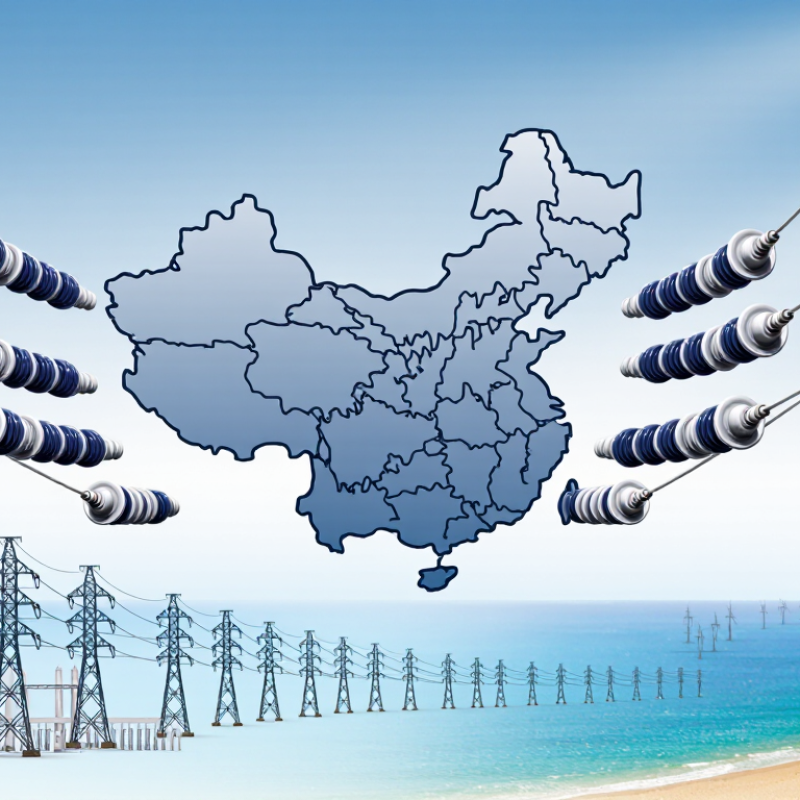
China has become a major manufacturing base for high-voltage composite insulators. Its suppliers serve transmission lines, substations, railways, and renewable-energy projects worldwide. Grand View Research estimates that the global composite insulators market will expand at approximately 6% annually through 2030. Demand is rising with grid modernization, longer transmission corridors, and offshore wind development.

Performance still matters more than factory scale. IEC 61109 requires careful attention to mechanical strength, weather resistance, and electrical reliability. CIGRE technical guidance also highlights pollution, ultraviolet exposure, interface sealing, and aging tests. These details separate dependable Composite Insulator Suppliers from low-cost traders. Inspectors should examine silicone-rubber formulation, fiberglass rod quality, crimping records, and routine test certificates. A polished catalog is not enough.

Dr. Ravi S. Gorur, an IEEE Fellow and recognized insulation specialist, has emphasized a practical principle: “The weakest component determines the reliability of the insulation system.” That warning deserves attention. Some suppliers provide impressive laboratory results but limited field evidence. Others offer competitive pricing while hiding test boundaries. Buyers should request type-test reports, factory-audit records, traceable material data, and references from comparable climates. Salt fog near coastal substations is not the same as dry desert dust.

This guide reviews leading Chinese manufacturers through technical capability, certification, export experience, customization, and after-sales support. The ranking is not absolute. Procurement conditions differ. A supplier successful in Europe may need redesign for tropical pollution or severe winter icing. Careful comparison remains essential.
Top China Composite Insulator Suppliers for Global Buyers

What Composite Insulators Are and Why They Matter

Top China Composite Insulator Suppliers for Global Buyers

What Composite Insulators Are and Why They Matter

Composite insulators combine a fiberglass-reinforced resin rod, silicone rubber sheds, and metal end fittings. This structure replaces heavier ceramic or glass bodies in many transmission and distribution systems. Their lower weight can simplify transport, tower handling, and installation in difficult terrain. Silicone rubber also repels water, helping reduce leakage current during rain or surface pollution. That matters near coastlines, industrial zones, and dusty corridors.

Reliable Chinese suppliers usually support designs for different voltage levels, climates, and mechanical loads. Buyers should request type-test reports, routine-test records, material traceability, and clear dimensional drawings. Testing against recognized international standards provides a more dependable comparison. Production experience matters too. A supplier that controls crimping, rubber molding, and rod preparation can reduce hidden defects. Small process errors may later become serious failures.

Composite insulators are not maintenance-free. UV exposure, chemical contamination, poor sealing, or incorrect installation can shorten service life. Not every silicone compound performs equally. Procurement teams should review aging tests, hydrophobicity recovery data, and local environmental conditions. I would also verify packaging before shipment, because damaged sheds may appear minor but affect field performance. A lower purchase price can become expensive after replacements, outages, or repeated inspections. The best evaluation is practical: compare documented testing, factory controls, application knowledge, and responsive technical communication.
Main Types of Composite Insulators Made in China

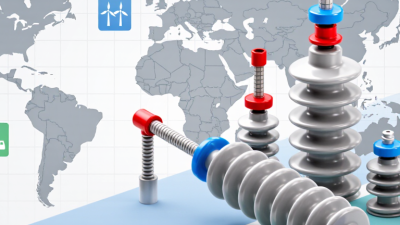
China’s composite insulator factories produce several main types for transmission, distribution, and substations. Suspension insulators support conductors on overhead lines and handle high tensile loads. They commonly use fiberglass-reinforced epoxy rods, silicone rubber sheds, and metal end fittings. Line post insulators provide rigid support and resist bending forces on distribution poles. Station post insulators serve busbars and equipment inside substations. Pin-type designs remain useful for lower-voltage networks and compact structures.

Hollow-core composite insulators are also made for circuit breakers, disconnectors, and instrument transformers. Their lighter structure can simplify installation, especially where lifting access is limited. Buyers should check rated voltage, creepage distance, mechanical load, sealing quality, and fitting dimensions. IEC 61109 and IEC 61952 offer useful reference points for relevant designs. Factory evaluation should include tensile tests, cantilever tests, weather-aging checks, and hydrophobicity inspection. Salt-fog performance matters in coastal regions. Dust matters near industrial areas. No type is perfect. A long creepage distance may increase size and cost, while a lighter design may require stricter installation control. Some catalog data also looks precise but lacks test conditions. Ask for complete reports, production records, and sample inspection before approving bulk supply.

Top China Composite Insulator Suppliers for Global Buyers - Main Types of Composite Insulators Made in China

Composite Insulator Type Typical Voltage Range Basic Construction Primary Installation Position Main Technical Advantages Common Applications Relevant International Standards Key Buyer Inspection Points
Suspension Insulator Medium- and high-voltage distribution and transmission systems; commonly from 10 kV upward Fiberglass-reinforced epoxy resin core, silicone rubber shed housing, and galvanized steel end fittings Suspended vertically or at a designed angle from transmission towers and distribution structures Low weight, good mechanical strength, strong resistance to pollution and wet conditions, and reduced handling load during installation Overhead transmission lines, sub-transmission systems, and distribution networks IEC 61109; IEC 62217; applicable utility and national requirements Specified mechanical tensile load, core diameter, shed profile, creepage distance, sealing quality, and corona-control design
Line Post Insulator Typically used in medium- and high-voltage overhead line systems Composite core with an integral or bonded polymer housing and metal mounting hardware Mounted vertically or horizontally on crossarms, poles, or steel structures Compact structure, high bending strength, reduced risk of brittle fracture, and suitability for restricted installation spaces Line support, compact overhead lines, urban distribution networks, and substations IEC 61952; IEC 62217; project-specific electrical and mechanical specifications Cantilever strength, interface dimensions, mounting-hole pattern, housing adhesion, and resistance to tracking and erosion
Pin-Type Composite Insulator Commonly used on medium-voltage distribution lines, often up to 36 kV depending on system design Polymer housing and sheds molded around a reinforced core with a threaded or compatible pin connection Installed on the top of distribution poles or crossarms Lightweight replacement for porcelain pin units, good pollution performance, and easy field handling Overhead distribution conductors, compact pole-top arrangements, and rural or coastal networks IEC 61952 and applicable distribution-insulator requirements Pin-thread compatibility, conductor groove dimensions, cantilever load, creepage distance, and weathering performance
Tension or Strain Insulator Medium- and high-voltage distribution and transmission systems High-strength fiberglass-reinforced core with silicone rubber housing and compression-type or forged metal fittings Installed horizontally or diagonally at dead ends, angles, and heavily loaded spans High tensile capacity, lower mass than many ceramic assemblies, and good resistance to mechanical vibration and contamination Dead-end poles, line-angle structures, river crossings, railway electrification, and long spans IEC 61109; IEC 62217; applicable mechanical-load and electrical-test specifications Specified tensile load, fitting crimping or compression quality, axial alignment, sealing, and hardware corrosion protection
Station Post Insulator Medium- and high-voltage substations, including high-voltage outdoor equipment Composite post body with a reinforced insulating core, weather sheds, and metal base and top fittings Mounted vertically on substation steelwork or equipment bases High cantilever strength, reduced mass, good seismic handling characteristics, and resistance to surface contamination Busbar support, disconnectors, grounding switches, instrument transformers, and outdoor switchgear IEC 62231; IEC 62217; relevant substation equipment standards Specified cantilever and torsional loads, flange flatness, mounting dimensions, partial-discharge performance, and shed condition
Equipment Bushing Low-, medium-, and high-voltage equipment applications, depending on design and insulation system Resin- or polymer-insulated body with conductive connection hardware, sealing elements, and an external weather shed where required Installed through transformer tanks, switchgear enclosures, cable boxes, and other equipment walls Electrical isolation across an enclosure, compact installation, controlled field distribution, and resistance to outdoor exposure in external designs Transformers, switchgear, reactors, capacitors, cable terminations, and compact substations IEC 60137; IEC 62217 for applicable polymeric insulation components Rated current and voltage, creepage distance, interface dimensions, sealing integrity, temperature rise, and dielectric test results
Railway and Traction Composite Insulator System-specific traction voltages, commonly including 1.5 kV DC, 3 kV DC, and 25 kV AC networks Polymer housing over a reinforced core with fittings designed for catenary, feeder, or return-current equipment Mounted on catenary structures, portals, poles, tunnels, and traction substations Low weight, strong resistance to vibration and pollution, and suitability for confined railway infrastructure Overhead contact systems, feeder lines, sectioning equipment, and railway substations IEC 61109 or relevant railway and traction-system specifications Mechanical load direction, electrical clearance, pollution performance, vibration resistance, fitting geometry, and fire or environmental requirements
Covered-Conductor Support Insulator Primarily medium-voltage distribution systems Polymer insulating body with conductor-support features, mounting hardware, and optional tie or clamp accessories Installed on poles and crossarms supporting covered or insulated conductors Helps maintain conductor separation, reduces installation weight, and supports compact line layouts in polluted or congested areas Covered-conductor networks, forest areas, urban distribution, and narrow right-of-way projects IEC 62217 and applicable covered-conductor system specifications Conductor compatibility, groove and clamp dimensions, mechanical load, material hardness, UV resistance, and tracking resistance
Arcing Horn and Line Hardware Assembly Used on medium- and high-voltage overhead lines where external arc-control hardware is specified Composite insulator combined with galvanized or stainless-steel fittings, grading components, and optional arcing horns Installed at suspension, tension, or line-post positions Provides insulation support while helping manage power-frequency arcing paths and protect polymer sheds from arc damage Transmission and distribution lines exposed to lightning, switching events, or severe contamination IEC 61109; IEC 62217; utility-specific coordination and hardware requirements Arc-gap dimensions, coordination with system insulation levels, hardware strength, corrosion protection, and correct fitting alignment

Note: Voltage ranges, mechanical ratings, creepage distances, and dimensions must be confirmed against the purchaser’s system voltage, pollution level, altitude, environmental conditions, and applicable project standards.

How to Evaluate China-Based Composite Insulator Suppliers

Choosing a China-based composite insulator supplier requires more than comparing unit prices. Field experience shows that process control often matters more than polished catalogs. Check compliance with IEC 61109 and IEC 62217, especially for polymeric housing, core strength, and aging tests. Request recent type-test reports from independent laboratories. Verify report numbers, test dates, and tested product configurations.

The International Energy Agency’s Electricity 2024 report expects global electricity demand to grow by an average of 3.4% annually through 2026. That growth increases pressure on transmission suppliers and delivery schedules. Ask suppliers for monthly production capacity, mold ownership, and documented lead times. Review silicone rubber formulation controls, crimping records, and warehouse protection against moisture and ultraviolet exposure. A supplier may pass one test and still show weak batch consistency. That is worth challenging.

Tips: Require a traceable sample lot. Compare hardness, tensile strength, and hydrophobicity results. Audit corrective-action records, not only certificates. Speak with the testing laboratory when possible. Also, inspect packaging before shipment; damaged sheds can create hidden installation risks. Market reports can support screening, but they cannot replace factory evidence. A video audit helps, yet an independent site visit remains more convincing. The evaluation may feel slow. That is usually safer.

Quality Standards and Certifications for Global Buyers

Top China Composite Insulator Suppliers for Global Buyers

Quality certification should guide every supplier comparison. IEC 61109 defines testing requirements for composite insulators used on overhead lines. IEC 62217 covers polymeric housing materials and common test principles. Reliable suppliers should provide type-test reports, routine-test records, factory inspection results, and batch traceability. ISO 9001 supports process control, but it does not prove product performance. That distinction is often missed.

ISO 9001 supports process control, but it does not prove product performance. That distinction is often missed.

The IEA’s Electricity Grids and Secure Energy Transitions report estimates that over 80 million kilometers of grids must be added or refurbished worldwide by 2040. This pressure increases demand for durable, documented insulation products. Buyers should also check salt-fog, aging, mechanical load, and thermal-cycle evidence. Reports from ISO/IEC 17025-accredited laboratories carry stronger technical credibility. Still, a certificate alone is not enough. Documents can be current while production methods quietly change.

Tips: Request the original test scope, not only a certificate copy. Confirm voltage class, creepage distance, shed design, and specified mechanical load. Ask for serial-number tracking from raw material to shipment. A factory audit should include molding, crimping, curing, and final inspection. Small gaps matter. One practical weakness is relying on translated paperwork without checking the issuing laboratory. Independent verification may cost more, but it can prevent expensive field failures.

Export, Customization, and After-Sales Considerations

Top China Composite Insulator Suppliers for Global Buyers

Export, Customization, and After-Sales Considerations

Selecting a Chinese composite insulator supplier requires more than comparing unit prices. Experienced buyers should review export records, production capacity, and quality-control procedures. Ask for test reports covering mechanical load, leakage distance, aging, and weather resistance. Documents should match the ordered design and destination standards. Small details matter. Packaging also deserves attention. Strong wooden cases, moisture barriers, and clear lifting marks can prevent damage during long sea transport.

Customization usually starts with the operating environment. Coastal projects may need longer creepage distances and stronger salt-fog resistance. High-altitude sites require careful insulation coordination. Provide voltage, mechanical load, fitting dimensions, conductor type, and installation drawings. A reliable engineering team should confirm these inputs before issuing a technical proposal. Some suppliers promise every modification too quickly. That should invite questions, not confidence. A cheaper customized design may create testing delays or replacement problems later.

After-sales support is often tested only after installation. Confirm warranty coverage, response times, spare-part availability, and procedures for investigating failures. Batch numbers and inspection records should remain traceable for years. Useful suppliers can review field photos, operating data, and damaged hardware without blaming installation immediately. Still, buyers should inspect their own assembly work carefully. Incorrect torque, poor storage, or unsuitable fittings can damage an otherwise sound insulator. Clear communication in English, realistic lead times, and documented corrective actions build more trust than polished sales promises.

Top China Composite Insulator Suppliers for Global Buyers

Export, customization, and after-sales considerations across common transmission voltage classes

This reference chart shows common transmission system voltage classes relevant to composite-insulator sourcing. Global buyers should match the required voltage level with IEC 61109 compliance, mechanical and electrical design requirements, export documentation, customization capability, delivery planning, and after-sales support. The chart uses standard voltage classes rather than company-specific performance data.

Reference: IEC 61109 applies to composite suspension and tension insulators for overhead AC systems; actual procurement specifications depend on the network operator, climate, pollution level, insulation coordination, and project design.