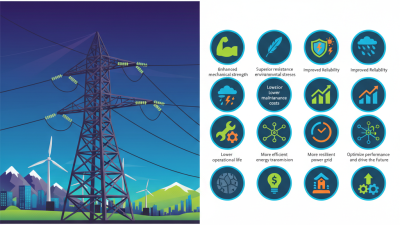
Choosing the right supplier matters when a composite insulator must withstand heat, pollution, wind, and daily electrical stress. The 2026 Best Composite Insulator Suppliers Worldwide guide examines manufacturers that serve transmission, distribution, railway, and substation projects across demanding markets. It focuses on verified capabilities rather than attractive claims.
Reliable Composite Insulator Suppliers typically combine field experience with controlled production. Their products may include silicone rubber housings, fiberglass-reinforced polymer cores, line post insulators, suspension units, and station insulators. Important details include shed design, hydrophobicity, mechanical strength, sealing quality, and resistance to ultraviolet exposure. A small manufacturing weakness can become a serious maintenance problem.
This guide considers compliance with recognized IEC and IEEE requirements, product testing, quality management, delivery performance, and technical support. It also reviews how suppliers handle salt fog, industrial pollution, freezing conditions, and high-altitude installations. Factory audits, test reports, customer references, and warranty terms provide stronger evidence than brochures alone. Experience in one climate does not guarantee performance everywhere. That limitation deserves attention.
No ranking is perfect. Supplier capabilities change, projects vary, and public information can remain incomplete. Therefore, buyers should confirm current certifications, production capacity, testing records, and local service arrangements before signing contracts. The strongest candidates communicate clearly, document their processes, and support products after shipment. Cost still matters, but a lower purchase price may hide inspection gaps, delayed replacements, or difficult installation work. This overview aims to help engineers, utilities, contractors, and procurement teams compare suppliers with greater confidence and practical judgment.

Composite insulators combine a fiberglass-reinforced polymer core with silicone rubber sheds. The core carries mechanical loads. The sheds resist rain, salt, dust, and industrial pollution. Unlike porcelain, this design is lighter and less vulnerable to shattering during transport or installation.
Their importance is growing as grids expand and weather conditions become less predictable. The International Energy Agency’s Electricity 2024 report projects global electricity demand to increase by about 3.4% annually from 2024 to 2026. More transmission equipment means more insulation exposed to wind, pollution, and temperature changes. CIGRE Technical Brochure 478 highlights housing design, interface sealing, and pollution performance as key reliability factors. A small seal defect can allow moisture into the core. The failure may appear years later. That risk is easy to underestimate.
Tips:
Check compliance with IEC 61109 and request verified type-test records. Compare tensile strength, creepage distance, corona performance, and aging results. Ask suppliers for field-service data, not only laboratory certificates. Examine shed flexibility after cold-weather testing. Composite insulators can be excellent, but careless specification still causes problems. Even experienced engineers should review local pollution maps and installation practices before selecting a supplier.
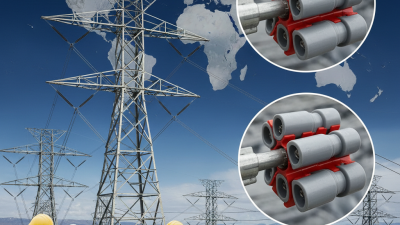
Evaluating global composite insulator suppliers requires more than comparing unit prices. A credible supplier shows practical experience with your voltage class, climate, and installation conditions. Ask for project references, manufacturing records, and test reports matching the proposed design. Field knowledge matters.
Technical quality should be visible and repeatable. Review housing material, core protection, seal design, and end-fitting control. Independent laboratory results should cover mechanical load, electrical performance, aging, and pollution resistance. Confirm which standards apply to your grid. Check whether reports identify the exact product configuration. Vague certificates deserve questions.
Reliability also depends on the supplier’s internal systems. Check lot traceability, inspection checkpoints, calibration records, packaging methods, and replacement procedures. Delivery promises should include realistic lead times and contingency plans. Technical support must continue after shipment, especially during installation and severe weather. A useful evaluation includes a factory audit or video inspection, not only polished documents. Still, no checklist captures every risk. A supplier may pass laboratory tests yet struggle with communication or site changes. Speak with recent customers when possible, and record both strengths and unresolved concerns. That small record can prevent an expensive assumption.
The 2026 ranking of the best composite insulator suppliers worldwide examines more than production volume. It considers field experience, testing capacity, material consistency, delivery performance, and technical support. Suppliers with proven voltage-class experience receive stronger consideration. So do manufacturers that document silicone housing quality, fiberglass rod strength, and interface bonding.
The highest-ranked suppliers typically operate accredited laboratories and maintain traceable production records. They test hydrophobicity, mechanical load, thermal aging, pollution resistance, and sealing performance. Their engineers also support installation teams with clear drawings and inspection guidance. This matters in coastal substations, where salt deposits can accelerate surface leakage. It matters in cold regions too, where brittle materials create different risks.
The middle ranking includes capable suppliers with competitive pricing and solid regional service. However, some rely heavily on self-reported data. That weakness deserves attention. A supplier may show excellent factory results but provide limited long-term field evidence. Buyers should request test standards, inspection reports, warranty terms, and references from comparable grid projects. Delivery reliability also deserves a score, because a technically strong product cannot help when replacement units arrive late. This ranking remains practical rather than perfect. Performance can change after ownership, raw material, or production-line changes.
2026 Best Composite Insulator Suppliers Worldwide
Applications now shape composite insulator selection more than catalog ratings. Transmission lines need strong mechanical performance, reliable sealing, and stable behavior under wind and ice. Substations demand compact designs, pollution resistance, and careful coordination with arresters and bushings. Coastal projects face salt deposits, while high-altitude sites require attention to air density and corona performance. The operating environment changes the specification.
Standards provide the technical baseline. IEC 62217 covers common requirements for composite insulators, while IEC 61109 addresses suspension and tension units for overhead lines. IEC 60815 helps engineers evaluate insulation under polluted conditions. Suppliers should provide type-test evidence, routine-test records, material traceability, and clearly defined mechanical and electrical ratings. Seismic or region-specific requirements may also apply. Paperwork matters.
Technology separates capable suppliers from ordinary ones. Silicone rubber sheds can support hydrophobic performance, but compound quality and shed design remain critical. Fiberglass-reinforced polymer cores need controlled interfaces and effective moisture sealing. Modern factories may use automated molding, digital dimensional checks, and production traceability systems. These tools reduce variation, though they do not replace skilled inspection. A checklist can still miss aging risks. Independent testing, factory audits, and references from similar climates offer stronger evidence than polished brochures. Suppliers should also explain maintenance access, replacement procedures, and failure investigation practices before contract approval.
Standard voltage coverage is a practical starting point for evaluating composite-insulator suppliers. The chart shows IEC-recognized highest-voltage-for-equipment levels commonly associated with transmission and sub-transmission applications.
Reference framework: IEC 60038 standard voltage levels, IEC 61109 requirements for composite suspension and tension insulators, and IEC 62217 general requirements for polymeric insulators. Supplier selection should also verify pollution performance, mechanical loading, aging resistance, testing capability, and regional grid requirements.
Choosing the right composite insulator supplier starts with your project conditions, not a product catalogue. Define system voltage, pollution level, altitude, wind load, temperature range, and installation space. A supplier with field experience should explain how these factors affect housing design, core strength, and creepage distance.
Ask for verified test reports, factory quality procedures, and traceable raw-material records. Reliable suppliers can provide routine test results, type-test evidence, and clear production tolerances. Visit the facility if possible. Observe silicone molding, crimping, curing, and final inspection. Small details matter. A clean production line is encouraging, but it is not proof by itself. I have learned that impressive documents can still hide weak follow-up service. Check references from projects with similar environments, and ask how failures were investigated.
Tips: Compare technical support, delivery consistency, warranty terms, and spare-part availability. Request samples before approving large quantities. Inspect the interface between fittings and the composite core. Confirm testing follows recognized international standards and suits your grid conditions. Do not choose only by price. The cheapest option may bring replacement delays, unclear responsibilities, or higher maintenance costs. Even experienced buyers can overlook local weather data, so review the design with an independent engineer before signing.
A practical, brand-neutral evaluation matrix for selecting composite insulator suppliers
| Evaluation Dimension | Typical Project Requirement or Benchmark | Evidence to Request from the Supplier | Why It Matters | Recommended Assessment |
|---|---|---|---|---|
| Applicable product standard | Composite suspension and tension insulators for overhead lines should normally be evaluated against IEC 61109. General composite-insulator design and testing principles are covered by IEC 62217. | Current type-test reports, routine-test procedures, design drawings, and a standards compliance statement. | Confirms that the product has been designed and tested against recognized international requirements. | Mandatory |
| Voltage and insulation coordination | Verify rated voltage, highest system voltage, power-frequency withstand, lightning impulse withstand, and switching impulse withstand where applicable. Typical overhead-line classes include 11–33 kV, 66–132 kV, 220–245 kV, and 400 kV systems. | Electrical data sheet, insulation-coordination study inputs, impulse-test records, and approved project specifications. | Prevents under-insulation, flashover risk, and incompatibility with the network protection design. | Project-specific |
| Creepage distance and pollution performance | Selection should follow site pollution severity, altitude, rainfall, industrial contamination, coastal salt exposure, and the applicable guidance in IEC 60815. Creepage distance must be calculated for the actual system voltage and pollution environment. | Creepage-distance calculation, shed profile drawing, pollution-class assumptions, salt-fog or equivalent test documentation. | Improves resistance to leakage current, dry-band arcing, and pollution flashover. | High priority |
| Mechanical load capability | The specified mechanical load must cover the line design loads, including conductor tension, wind, ice, broken-wire conditions, and safety factors. Rated mechanical load should be stated separately from routine proof-load values. | Mechanical design calculation, tensile test reports, specified mechanical load, routine proof-load value, and fitting drawings. | Reduces the risk of core fracture, fitting separation, or mechanical failure during service. | Mandatory |
| Housing and material system | The polymeric housing should provide suitable hydrophobicity retention, tracking and erosion resistance, UV resistance, weather resistance, and compatibility with the fiberglass-reinforced polymer core. | Material specifications, compound-change controls, accelerated-aging results, tracking-and-erosion test records, and raw-material traceability. | The housing protects the core and directly affects long-term outdoor performance. | High priority |
| End fittings and interface compatibility | Fittings must match the conductor hardware, tower arrangement, clevis or tongue dimensions, locking system, bolt configuration, and required corrosion protection. Dimensional tolerances should be defined before production. | Certified dimensional drawings, interface-control documents, coating or galvanizing specifications, and sample-fit inspection records. | Avoids installation delays, incompatible hardware, premature corrosion, and field modification. | Mandatory |
| Quality management and traceability | A documented quality-management system should control incoming materials, molding, crimping or assembly, routine testing, nonconforming products, corrective actions, and batch identification. | Quality certificate, inspection and test plan, process flow chart, batch records, calibration certificates, and sample certificates of conformity. | Makes product consistency measurable and supports investigation throughout the service life. | Mandatory |
| Type, design, and routine testing | The supplier should distinguish between design tests, type tests, sample tests, and routine tests, with acceptance criteria and test frequency defined for each product family. | Test matrix, laboratory accreditation details, test dates, product configuration tested, acceptance criteria, and routine-test sample records. | Prevents reliance on unrelated or outdated test reports. | Mandatory |
| Factory capacity and delivery capability | Evaluate production capacity against the project quantity, required delivery windows, export packaging, inspection dates, and the need for phased shipments. Capacity should be demonstrated for the exact product family, not only for general polymer products. | Manufacturing capacity statement, production schedule, inspection plan, packaging specification, shipment history, and business-continuity plan. | Reduces schedule risk for grid construction, replacement programs, and emergency stock requirements. | Commercial priority |
| Environmental and operating conditions | The design review should cover minimum and maximum temperature, altitude, wind, ice, solar radiation, wildfire exposure, coastal salt, industrial pollution, and seismic conditions where relevant. | Application-limit statement, environmental test data, installation instructions, and design confirmation for the project site. | Ensures the selected insulator is suitable for the actual operating environment rather than only laboratory conditions. | Project-specific |
| Lifecycle value and warranty | Compare total cost, inspection requirements, expected maintenance, spare-part availability, warranty coverage, claim procedures, and technical support rather than purchase price alone. | Warranty terms, recommended inspection intervals, spare-parts policy, failure-investigation procedure, and total-cost-of-ownership quotation. | A lower initial price may create higher replacement, outage, and maintenance costs. | Long-term value |
| Supplier scoring method | Use a weighted technical-commercial score. A practical starting model is: technical compliance 30%, testing and quality 25%, project experience 15%, delivery capability 15%, lifecycle cost 10%, and technical support 5%. | Completed compliance matrix, deviations list, reference-project documentation, commercial offer, and clarifications log. | Creates a transparent comparison and prevents price from becoming the only selection criterion. | Recommended |