Leave Your Message

7 Best Stand Off Insulators for Global Buyers?

Choosing among the 7 Best Stand Off Insulators for Global Buyers requires more than comparing catalog prices. A Stand Off Insulator must support conductors, resist electrical stress, and survive heat, moisture, dust, and vibration. These demands change sharply between a dry indoor switchboard and a coastal substation covered with salt deposits.

Grand View Research estimated the global electrical insulators market at approximately USD 14.2 billion in 2023. Its report expects continued growth through 2030, driven by grid expansion, renewable projects, and equipment replacement. The International Energy Agency’s Electricity Grids and Secure Energy Transitions report also warns that grid investment must accelerate significantly before 2030. More infrastructure means more insulation decisions. It does not mean every product is suitable.

Dr. R. S. Gorur, a recognized specialist in high-voltage insulation, emphasizes: “Insulation performance depends on the environment, not only on the material.” That principle deserves attention. Epoxy, porcelain, and polymer designs can all perform well, but their creepage distance, mechanical strength, tracking resistance, and temperature range must match the installation. A compact insulator may look efficient on a drawing. It may fail earlier in polluted air or under repeated thermal cycling.

This guide compares seven practical options for international buyers. It considers voltage class, mounting style, certification evidence, supplier consistency, and lifecycle value. Some ratings are difficult to compare directly across regions. That is an unavoidable weakness. Buyers should verify test reports, dimensional drawings, and operating conditions before placing an order. A cheaper component can become an expensive mistake.
7 Best Stand Off Insulators for Global Buyers?

What Are Stand-Off Insulators and Why Do Global Buyers Need Them?

7 Best Stand Off Insulators for Global Buyers?

What Are Stand-Off Insulators and Why Do Global Buyers Need Them?

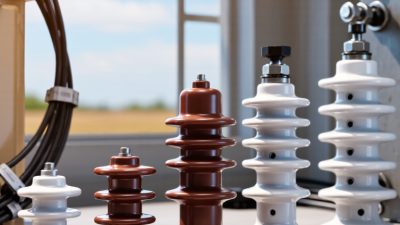
Stand-off insulators are rigid electrical supports used to hold conductors away from panels, frames, and grounded surfaces. They maintain safe spacing and help prevent arcing, tracking, and accidental contact. Common materials include porcelain, epoxy, and reinforced polymers. Each material behaves differently under heat, moisture, vibration, and mechanical stress.

For global buyers, selection involves more than voltage ratings. Projects may operate in coastal air, dusty factories, or freezing outdoor environments. Buyers should check insulation performance, creepage distance, mounting dimensions, temperature range, and load strength. Product drawings and test reports also reduce communication errors across languages and suppliers. A part that fits electrically may still fail mechanically. That detail is often overlooked.

Tips: Confirm the thread size before ordering. Request samples for harsh environments. Review packaging quality, because hairline cracks may appear after long transport. Ask whether replacement units will remain available. Certification can support reliability, but it should match the actual installation requirements. The cheapest option is not always the safest. Still, higher price alone proves little. Careful comparison is necessary, and some specifications may need a second review.
How to Classify the Seven Main Stand-Off Insulator Types

7 Best Stand-Off Insulators for Global Buyers?

How to Classify the Seven Main Stand-Off Insulator Types

Global buyers rarely need one universal “best” stand-off insulator. Classification should begin with voltage, mounting space, current path, and environmental exposure. The IEA Electricity 2024 report forecasts global electricity demand growth of 3.3% in 2024 and 4% in 2025. Grid hardware will face more varied operating conditions.

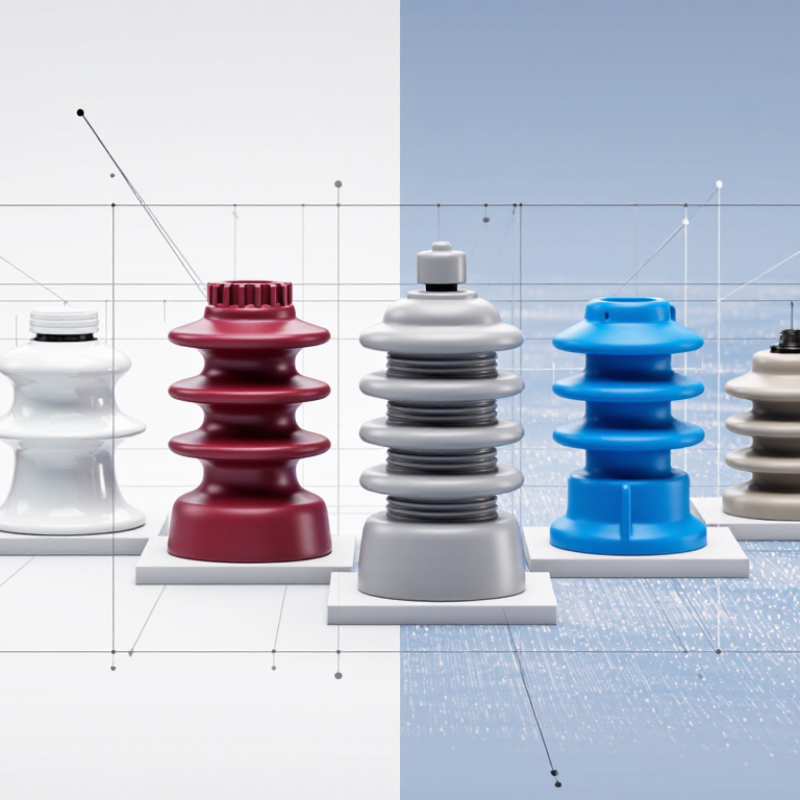
Seven practical types cover most applications. Threaded low-voltage insulators suit compact panels and control cabinets. Medium-voltage porcelain units provide rigid support in switchgear. High-voltage composite units reduce weight and improve outdoor resistance. Busbar support insulators hold copper or aluminum conductors under mechanical stress. PCB stand-offs protect small circuits from enclosure surfaces. Feed-through insulators guide energized conductors through barriers. Epoxy-resin supports offer precise insulation inside molded assemblies.

Material alone does not decide performance. Porcelain handles heat well, but it can crack after impact. Polymer bodies resist contamination, yet aging under ultraviolet exposure needs review. Composite designs are lighter, though installation torque must remain controlled. The IEA Renewables 2024 report expects about 5,500 GW of new renewable capacity between 2024 and 2030. That growth increases demand for outdoor equipment, but forecasts do not replace testing.

Buyers should verify creepage distance, dielectric strength, impulse withstand, temperature class, and flammability data. Standards such as IEC 60168 and IEC 62271-1 provide useful testing references. A neat seven-box chart can mislead. Humidity, dust, vibration, and enclosure geometry often change the final choice.

Key Performance Factors for Comparing Stand-Off Insulators

Choosing among the 7 best stand-off insulators requires more than comparing catalogue prices. Performance depends on voltage, load, environment, and installation accuracy.

Dielectric strength is the starting point, but creepage distance and clearance deserve equal attention. Dust, salt, and humidity can create leakage paths across an insulator’s surface. In coastal installations, I look for tested creepage data, not only a headline voltage rating. Mechanical strength also matters. A ceramic or polymer support may carry a heavy busbar, yet vibration can expose weak mounting points over time. Check tensile, bending, and impact ratings under realistic temperatures.

Material stability is often underestimated. Thermal cycling can loosen hardware or create small cracks around mounting holes. UV exposure may age some polymer surfaces, while brittle materials can suffer during transport. Dimensional tolerances matter too. A small alignment error can transfer unwanted stress to the conductor. My practical mistake was focusing on electrical clearance and overlooking the support bracket. The insulator performed well, but the assembly did not.

Tips: Request test reports, temperature ranges, mounting drawings, and production tolerances before approval. Compare results under wet, polluted, and vibration conditions. Ask whether samples represent normal production, not a specially selected batch. When requirements are unclear, consult a qualified electrical engineer and document the decision. Cheap insulation can become expensive after rework.

How to Select the Best Stand-Off Insulator for Each Application

Selecting the best stand-off insulator begins with the application, not the catalog ranking. Measure operating voltage, impulse withstand, creepage distance, mechanical load, and available space. IEC 60168 provides test methods for indoor and outdoor post insulators, while IEC 60815-1 guides creepage selection in polluted environments.

Pollution changes everything. Coastal salt, cement dust, and industrial moisture can create a conductive film across the surface. Choose a longer creepage path when contamination is severe. Do not rely only on nominal voltage. The International Energy Agency reported that annual global grid investment must exceed 600 billion dollars by 2030 to support reliable expansion. That pressure makes compact, durable insulation increasingly important.

Material selection needs practical judgment. Epoxy offers strong dimensional stability and useful resistance to moisture. Ceramic can perform reliably at high temperatures, but it may require more careful handling. Silicone-based designs can improve pollution performance, though aging and tracking data deserve close review. Check thermal cycling, torque limits, partial-discharge results, and flame behavior. Ask for test reports, not marketing claims.

Installation details are often overlooked. A sharp conductor edge, uneven washer, or over-tightened bolt can damage the assembly. Leave room for cleaning and inspection. Small mistakes become expensive later. Supplier experience, traceable test records, and compliance with IEC or applicable national standards should carry more weight than appearance or price. A slightly conservative design is often wiser, but every extra millimeter should have a reason.

Global Purchasing, Compliance, Installation, and Maintenance Considerations

7 Best Stand-Off Insulators for Global Buyers

Choosing the best stand-off insulator depends on voltage, current, spacing, and mechanical load. Porcelain suits heat and outdoor exposure, while epoxy offers precise dimensions and strong insulation. Silicone-based designs can resist moisture and surface contamination. Thermoplastic options may reduce weight and cost, but temperature limits need careful review. A useful buying specification lists rated voltage, impulse withstand, creepage distance, mounting-hole size, and busbar weight.

Global purchasing requires more than comparing unit prices. Ask for material data, routine test records, dimensional drawings, and batch traceability. Confirm whether the product aligns with applicable IEC, IEEE, or regional requirements. Do not assume one certificate satisfies every destination. Customs documents should match the packing list and technical description. Small errors can delay a shipment.

Installation quality often decides service life. Clean the contact surfaces and check alignment before tightening hardware. Use the manufacturer’s torque range; excessive force can create hidden cracks. Leave adequate air clearance around energized conductors. During maintenance, inspect for tracking marks, chips, loosened fasteners, moisture, and unusual discoloration. Record photographs and torque checks for future comparison. A perfect checklist does not exist. I still recommend reviewing the first installed batch after several weeks, because field conditions often reveal assumptions missed during procurement.

7 Best Stand-Off Insulators for Global Buyers?

Global Purchasing, Compliance, Installation, and Maintenance Considerations

This comparison uses representative midpoints from commonly published material-property ranges. Alumina, steatite, and porcelain are generally preferred for high-temperature or outdoor duty, while PTFE, PEEK, and glass-filled epoxy systems can be suitable where low weight, machinability, or electrical insulation is prioritized. Actual performance depends on grade, geometry, creepage distance, humidity, pollution level, mechanical loading, and the complete assembly.

For global purchasing, confirm the applicable IEC 60664-1 insulation-coordination requirements, IEC 60168 mechanical and electrical test expectations for ceramic or glass insulators, material flammability requirements, dimensional tolerances, mounting torque, surface finish, traceability, and replacement inspection intervals. Values are indicative only and must be verified against the selected material datasheet and certification documents.