Top 10 Heat Resistant Insulators for Global Buyers
Choosing a Heat Resistant Insulator is not simply a search for the highest temperature rating. Global buyers must match the material to heat, pressure, moisture, voltage, vibration, and installation conditions. A ceramic fiber blanket may protect a furnace wall at extreme temperatures, while mica sheets may suit electrical barriers inside compact equipment. Aerogel offers low thermal conductivity, but its cost and handling requirements deserve attention. Small details matter.
Professor Michael F. Ashby, a leading authority on engineering materials selection, wrote, “The best material is the one that does the job at minimum cost.” This principle remains practical for international purchasing teams. A cheaper insulator can become expensive when it cracks, absorbs water, releases fibers, or requires frequent replacement. Performance must be measured in the real environment, not only in a laboratory brochure.
This guide examines ten widely used Heat Resistant Insulator options for global buyers. It considers maximum service temperature, thermal conductivity, electrical behavior, mechanical strength, moisture resistance, availability, and installation effort. The list includes ceramic fiber, mica, calcium silicate, glass fiber, vermiculite, aerogel, refractory brick, silicone foam, PTFE, and high-temperature composites. Each material has a useful role. None is perfect.
That limitation matters.
Actual results can change with thickness, joints, surface coatings, airflow, and repeated heating cycles. Buyers should request test reports, safety data, batch details, and application references before approving a purchase. Standards may also differ between regions. A product that performs well in a dry furnace may disappoint near steam, salt spray, or continuous electrical load. Careful comparison is less dramatic, but usually more reliable.
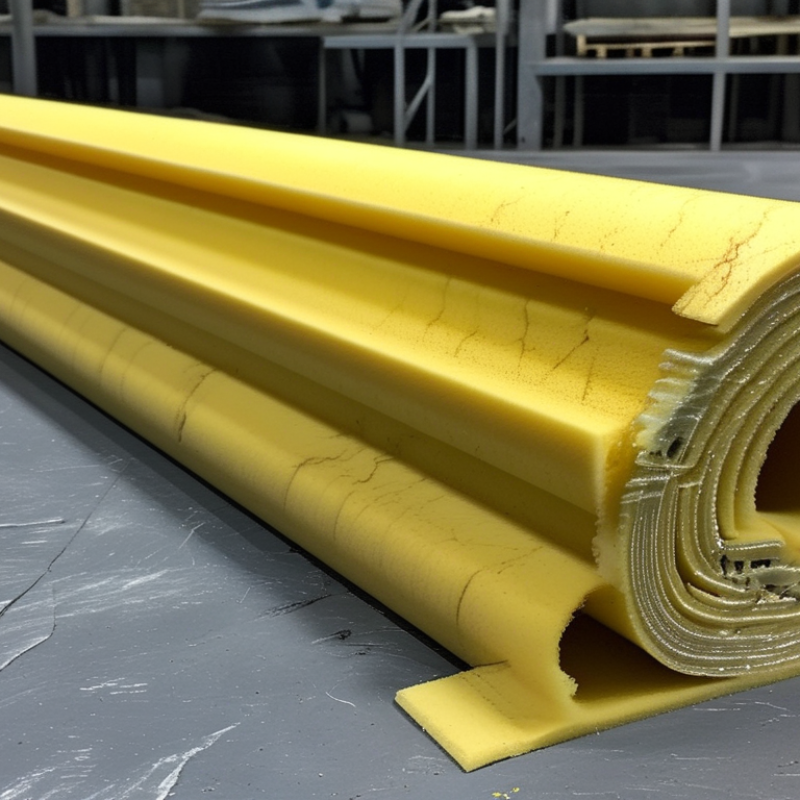
What Heat-Resistant Insulators Are and How They Work
Heat-resistant insulators are materials that slow heat movement and, in many applications, prevent electrical current from passing through. They do not stop heat completely. They create resistance against conduction, convection, or radiation.
Ceramic fiber, mica, aerogel, calcium silicate, vermiculite, refractory brick, and high-temperature glass are common choices. Each works differently.
A ceramic fiber blanket traps air inside fine fibers, reducing conduction and convection. A reflective coating limits radiant heat from hot metal surfaces. Dense refractory brick stores heat while protecting nearby structures from direct flame.
Aerogel uses a highly porous structure, making it effective where space is limited. Mica also offers strong electrical insulation near heating elements.
Performance depends on more than the stated temperature rating. A supplier should provide thermal conductivity data, dielectric strength, density, moisture resistance, and tested service limits.
Check the temperature at the actual contact point, not only the surrounding air. Small gaps can become hot spots. Compression can also reduce insulation performance.
In practical equipment, installation often decides the result. Poor joints, vibration, dust, and repeated heating cycles may damage an otherwise suitable material.
No option is perfect. A lightweight insulator may crack under pressure, while a dense one may transfer heat more slowly but add weight. Regional safety standards and test methods can differ, so buyers should verify laboratory reports and application conditions before selecting one of the top ten options.
Key Properties Used to Compare Heat-Resistant Insulators
When comparing heat-resistant insulators, temperature rating is only the starting point. Check the maximum continuous service temperature, not just the short-term peak. Thermal conductivity shows how quickly heat crosses the material. Lower values usually improve protection, but density and thickness also matter. A thin, low-density sheet may perform differently from a dense molded part. Thermal shock resistance matters near furnaces, burners, and rapid cooling zones. Materials can crack when temperatures change too quickly. That detail is easy to miss.
Serious buyers should compare dielectric strength, compressive strength, moisture absorption, and chemical stability. An insulator beside steam lines needs different protection from one inside a dry electrical cabinet. Moisture can reduce insulation performance and increase dimensional change. Under load, creep may slowly reduce contact pressure or create gaps. Review test methods, sample thickness, aging conditions, and tolerances before comparing datasheets. Values tested at 23°C may not represent factory conditions. A perfect rating on paper can disappoint in service. Fit changes everything.
Tips: Request independent test reports and a clear temperature-versus-time curve. Ask whether the rating is continuous, intermittent, or based on brief exposure. Check thermal expansion against nearby metals. Mismatched expansion can loosen fasteners or break seals. Inspect the surface finish, edge quality, and fit. Small gaps matter. For global purchasing, confirm packaging, humidity protection, inspection records, and local compliance documents. If the application is uncertain, test a sample under real heat cycles. Test before ordering.
Applications, Temperature Ranges, and Selection Factors
Top 10 Heat Resistant Insulators for Global Buyers
Heat-resistant insulation must match the working temperature and the application environment.
Ceramic fiber commonly supports about 1,000–1,400°C in furnace linings and kiln doors. Alumina and zirconia handle higher temperatures, often above 1,600°C, but they cost more and can become brittle. Silica aerogel works well around pipes and storage tanks, usually up to 650°C, where limited space matters. Calcium silicate suits boilers, ducts, and industrial equipment at roughly 650–1,000°C. Check the exact grade.
Other useful choices include mica, vermiculite, glass fiber, mineral wool, and high-silica fabric. Mica can protect electrical parts near hot zones. Vermiculite supports fire barriers and lightweight panels. Glass fiber commonly serves below 550°C, while mineral wool often works near 650°C.
High-silica fabric can protect workers from radiant heat, sometimes near 1,000°C. These ranges are practical guides, not guarantees.
Selection requires more than a temperature rating. Consider continuous exposure, thermal shock, compression, moisture, vibration, and chemical contact. A furnace liner may need low thermal conductivity and strong mechanical support. Pipe insulation may prioritize flexibility and easy installation. For outdoor systems, water absorption can quietly reduce performance.
Measure the hottest surface, not the average temperature. A lower-rated material may survive briefly, but that is a weak design choice. Many buyers also overlook thickness, joint gaps, and maintenance access. The most expensive option is not always the safest one. Good testing can reveal that assumption.
Global Sourcing, Safety Standards, and Cost Considerations
Top 10 Heat Resistant Insulators for Global Buyers
Global sourcing begins with the actual operating temperature, not the catalogue rating.
The International Energy Agency’s Energy Technology Perspectives 2024 reports that industry uses about 37% of global final energy. Small insulation failures can therefore create measurable waste. Buyers should compare
thermal conductivity, dielectric strength, compression resistance, moisture absorption, and continuous-use temperature.
A furnace lining, cable sleeve, and high-temperature gasket need different evidence.
Safety documents must travel with every shipment.
Request batch traceability, test dates, dimensional tolerances, and declarations against relevant IEC, ASTM, or ISO methods. For fire performance, test conditions matter. A material tested in a dry laboratory may behave differently beside oil mist, vibration, or repeated thermal cycling. That detail is often missed. It should not be.
Cost comparison needs a landed-cost model.
Include tooling, export packing, freight, customs duties, inspection, rejected lots, and replacement labor. The U.S. Department of Energy’s Industrial Decarbonization Roadmap identifies process heat as a major industrial emissions challenge, making reliable thermal control financially important. A lower unit price may fail after three months. A 2023 European Commission technical report also emphasizes performance verification for energy-intensive industrial equipment. Still, reports cannot replace site trials.
I would test small samples at real temperature, humidity, pressure, and cycling frequency before approving the top ten options. This is slower. It is usually cheaper than a shutdown.