Top 10 Grounding Busbar Insulator Suppliers for Global Buyers
Choosing a Grounding Busbar Insulator is a technical decision, not a simple price comparison. These components support busbars, maintain electrical clearance, and help prevent accidental contact inside grounding and bonding systems. In a real cabinet, a small insulator may face heat, vibration, dust, moisture, and repeated maintenance.
Mike Holt, a respected electrical safety educator, has said, “Grounding is the foundation of electrical safety.” That principle remains practical for global buyers. A supplier must provide more than attractive product images. Buyers should examine material type, insulation strength, temperature rating, flame resistance, mechanical stability, and dimensional consistency. Documentation matters too. Test reports, drawings, batch records, and traceable quality procedures can reveal how seriously a manufacturer manages risk.
This Top 10 Grounding Busbar Insulator Suppliers for Global Buyers guide compares suppliers through a procurement-focused lens. It considers product range, customization, manufacturing experience, export capability, response speed, and technical support. Some suppliers appear strong on certifications but weaker on communication. Others offer flexible designs but limited public testing information. No ranking is perfect. It should not replace engineering verification.
Look closely. Ask difficult questions.
The right supplier should understand copper and aluminum busbars, mounting environments, creepage requirements, and installation constraints. Buyers should also confirm packaging quality, delivery reliability, and after-sales support before placing large orders. A polished website proves little. Consistent samples and clear engineering answers prove much more. This guide helps purchasers reduce uncertainty and identify Grounding Busbar Insulator partners suited to demanding international projects.
What Grounding Busbar Insulators Are and Why They Matter
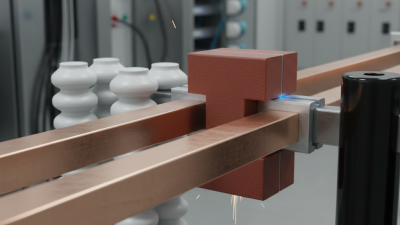
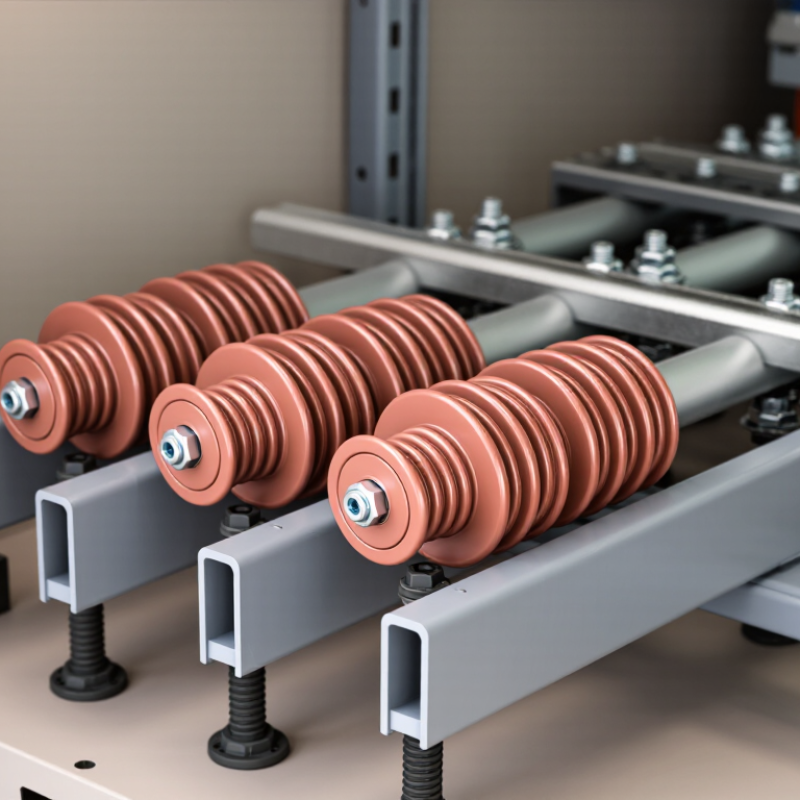
Grounding busbar insulators are small, nonconductive supports that hold copper or aluminum busbars inside electrical panels. They maintain clearance from metal enclosures while keeping the grounding path stable. This role looks simple. It is not. Heat, vibration, dust, and short-circuit forces can slowly weaken a poorly selected support.
Their importance becomes clearer during faults. IEEE Std 80-2013 evaluates touch and step voltage using a 50-kilogram body model and fault-clearing time. A secure busbar assembly helps keep protective conductors correctly positioned until protective devices operate. IEC 60364-5-54 also stresses reliable earthing and protective bonding arrangements. These standards do not make an installation safe by themselves. Design errors still happen. A strong insulator cannot repair an undersized conductor or a loose connection.
Tips:
Check rated voltage, short-circuit withstand, creepage distance, temperature range, and mounting torque. Ask suppliers for test reports, material data, and batch traceability. For humid or polluted sites, choose surfaces that resist tracking and moisture absorption. NFPA 70, Article 250, provides practical grounding and bonding requirements for many installations. Buyers should compare those requirements with local codes and the equipment’s fault level. Do not select only by price. A cheaper support may fit perfectly, yet fail after repeated thermal cycling. That is an uncomfortable possibility, but it deserves attention.
Key Specifications for Comparing Global Insulator Suppliers
Choosing a grounding busbar insulator supplier requires more than comparing price lists. Global buyers should check rated voltage, insulation material, creepage distance, and clearance. These values must match the installation environment, not just the product catalogue.
Ask for dimensional drawings and verified test reports. Confirm busbar thickness, mounting-hole spacing, thread size, and allowable tightening torque. A practical sample inspection can reveal weak threads, uneven surfaces, or brittle resin.
Temperature ratings also matter. A cabinet near a heat source needs stronger thermal performance than a clean indoor panel. For coastal or humid sites, review salt-fog resistance, tracking performance, and water absorption data.
Suppliers with batch traceability and controlled production records usually provide more reliable support. However, paperwork is not proof by itself. I still prefer checking samples before approving large orders.
Tips: Compare at least three suppliers using the same specification sheet. Request photographs of packing, labels, and finished parts. Confirm whether test results apply to the exact model. Review lead time, minimum order quantity, replacement policy, and export packaging. Small details matter. A cracked insulator can stop a complete assembly. Also, leave room for engineering review. Initial specifications are sometimes incomplete, especially when busbar dimensions change late in a project.
How to Evaluate Manufacturing Quality and Safety Compliance
Top 10 Grounding Busbar Insulator Suppliers for Global Buyers
How to Evaluate Manufacturing Quality and Safety Compliance
A reliable supplier should prove performance, not merely display certificates. During factory audits, inspect resin surfaces, embedded hardware, and moulding lines. Voids, sharp edges, or uneven threads can weaken clamping under fault conditions. Request batch records, material certificates, and traceable serial or lot numbers. ISO 9001 supports process control, but it does not guarantee electrical safety.
Use IEC 61439-1 and IEC 60664-1 when checking insulation coordination, creepage, clearance, and dielectric withstand requirements. For polymer parts, review flammability classification, comparative tracking index, temperature rating, and resistance to moisture. The IEC 60695 fire-hazard series provides useful test principles. A supplier should provide recent laboratory reports, not old promotional scans. Test the actual production design.
Safety evidence must match the installation market. NFPA’s Electrical Fires report estimated about 32,580 home fires annually involving electrical distribution and lighting equipment in the United States during 2015–2019. Grounding hardware is only one factor, yet weak insulation can increase system risk. Ask for independent testing and witness critical tests when possible. A factory video is not enough. It may look convincing, but it cannot reveal batch variation. I would also compare failed samples, corrective-action records, and retest rules. This step is often skipped. That is a mistake.
Top 10 Grounding Busbar Insulator Suppliers for Global Buyers
Top 10 Grounding Busbar Insulator Suppliers for Global Buyers
Choosing among the top 10 grounding busbar insulator suppliers requires more than comparing prices. Experienced buyers examine insulation material, voltage ratings, creepage distance, temperature resistance, and mechanical strength. Reliable suppliers provide dimensional drawings, test reports, traceability records, and samples before large orders. Their products should support stable grounding connections in switchgear, control panels, and industrial distribution systems.
A strong supplier also understands international packaging, export documentation, and batch consistency. Ask whether each insulator is tested for heat, moisture, vibration, and electrical leakage. Product tolerances matter. A small mismatch can delay assembly and increase installation work. Suppliers with responsive engineers usually solve design questions faster. Still, no shortlist is perfect. Factory audits and independent verification remain important, especially for unfamiliar production regions.
Tips: Request three samples from different batches. Compare surface finish, thread accuracy, mounting fit, and material markings. Confirm the exact operating environment before approval. Do not rely only on a polished catalog. Check replacement availability, lead times, warranty terms, and communication quality. A useful supplier should explain limitations clearly, not promise everything. For global buyers, the best choice is often the supplier offering consistent evidence, practical support, and controlled quality rather than the lowest quotation.
How to Select the Right Supplier for Your Project Needs
Selecting a grounding busbar insulator supplier starts with your installation conditions, not a catalog image. Define system voltage, fault current, temperature range, humidity, and available space. Fit matters.
Ask whether the supplier can provide suitable creepage and clearance distances for your environment. Coastal, dusty, and chemical areas may require different materials and surface designs. Compare mechanical strength, flame performance, tracking resistance, and long-term insulation stability. A technically experienced supplier should explain test methods, not only provide attractive specifications. Request material certificates, routine test records, dimensional drawings, and batch traceability. Samples are useful, but they cannot replace production inspection.
Supplier capability also includes engineering response and delivery control. Check whether the team reviews busbar thickness, mounting torque, hole positions, and enclosure constraints before confirming an order. Small mismatches can create expensive site delays. Ask about tooling, minimum quantities, replacement parts, packaging, and inspection procedures. Clear answers matter. Vague promises do not.
Price deserves careful judgment. The cheapest insulator may increase maintenance risk or require unplanned redesign. However, higher pricing alone does not prove better reliability. Compare the complete offer, including testing, documentation, lead time, and technical support. One practical lesson is easy to miss: suppliers may follow drawings too literally when project conditions change. Recheck the design after temperature, fault-level, or enclosure revisions. A strong supplier welcomes that review, even when it slows the purchase.