Leave Your Message
China’s Material Insulator industry is entering 2026 with stronger demand from power grids, electric vehicles, rail systems, and renewable-energy equipment. Manufacturers are no longer judged only by factory size. Their credibility depends on stable dielectric strength, thermal resistance, traceable testing, and consistent production.
Professor J. C. Fothergill, a widely cited electrical-insulation researcher, has emphasized: “Insulation is a system, not simply a material.” That principle guides this overview. A high-quality mica tape, ceramic bushing, silicone rubber part, or epoxy component must perform under heat, moisture, vibration, and electrical stress. Laboratory results matter. Field experience matters more.
This introduction examines ten leading Chinese manufacturers through practical criteria. These include material performance, production capacity, certification, research investment, export reliability, and customer support. It also considers partial-discharge testing, aging resistance, dimensional control, and supply-chain stability. Small details can reveal large differences. A clean production line matters. So does a properly sealed package after shipment.
No ranking is flawless.
Company information can change quickly. Public data may also favor larger brands, while smaller specialists sometimes offer deeper technical support. That limitation deserves attention. Buyers should verify current certificates, test reports, factory capabilities, and application records before making a decision. The following guide therefore aims to provide a useful starting point, not an unquestionable verdict, for engineers, procurement teams, and industrial decision-makers evaluating China’s Material Insulator manufacturers in 2026.
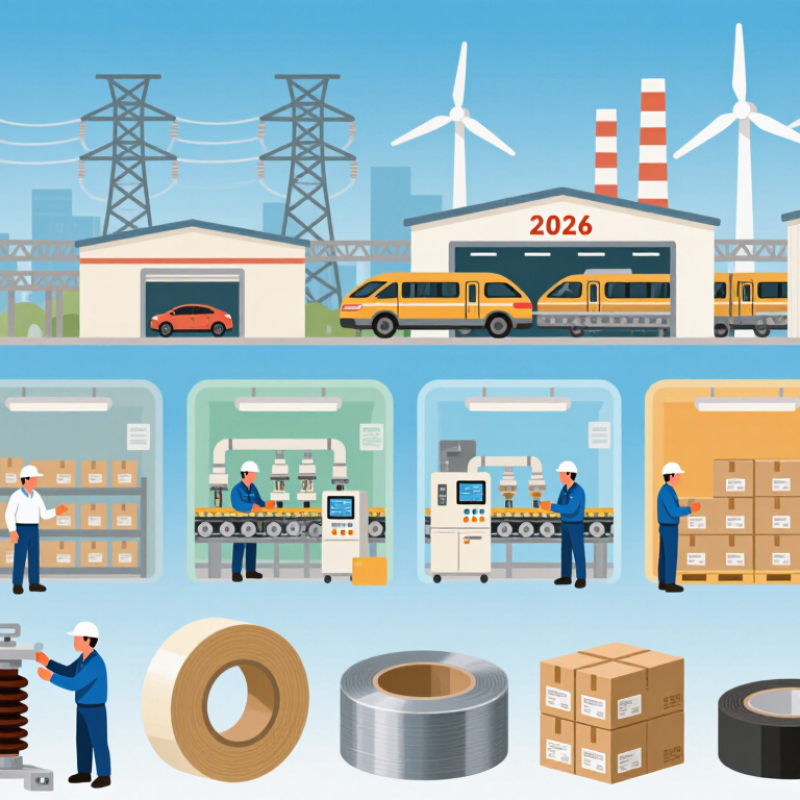
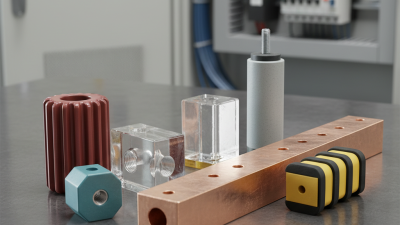
Material insulators separate conductive parts and control heat, current, and mechanical stress. Common types include ceramic, glass, mica, polymer, and mineral-based systems. Ceramic and glass tolerate high temperatures and outdoor exposure. Polymer insulation is lighter and easier to shape. Mica remains valuable where heat resistance and dielectric stability matter. No material performs perfectly.
Electrical performance depends on dielectric strength, insulation resistance, thermal class, tracking resistance, and moisture absorption. IEC 60664-1 emphasizes coordination between insulation, voltage, pollution level, and clearance distance. In practice, a thick insulator can still fail if dust, vibration, or condensation reaches its surface. That detail is often underestimated.
Industrial applications are expanding with electrification. The International Energy Agency’s Electricity 2024 report projects global electricity demand growth of about 4% annually from 2024 to 2026. This trend increases demand for reliable insulation in transformers, motors, switchgear, rail systems, charging equipment, and battery assemblies. Manufacturers must also control dimensional accuracy and aging performance during production. MarketsandMarkets estimates continued growth in electrical insulation materials through the decade, driven by power infrastructure and renewable energy equipment. Yet forecasts are not guarantees. Engineers should verify thermal cycling, partial discharge, flame behavior, and long-term mechanical strength under real operating conditions. Lab data alone may miss field problems.
| No. | Material Insulator Type | Material Category | Typical Dielectric Strength | Typical Continuous Service Temperature | Key Properties | Common Industrial Applications |
|---|---|---|---|---|---|---|
| 1 | Alumina Ceramic | Advanced ceramic | Approximately 10–20 kV/mm | Up to approximately 1,000°C, depending on grade and design | High hardness, excellent wear resistance, low electrical loss, strong arc resistance, and good dimensional stability. | High-voltage feedthroughs, ceramic substrates, electrical connectors, furnace components, sensor insulation, and semiconductor equipment. |
| 2 | Electrical Porcelain | Silicate ceramic | Approximately 4–12 kV/mm | Typically up to approximately 250–300°C in electrical service | Good mechanical strength, weather resistance, arc resistance, and long-term outdoor durability. | Overhead-line insulators, distribution equipment, bushings, switchgear supports, and substation insulation. |
| 3 | Borosilicate Glass | Inorganic glass | Approximately 8–13 kV/mm | Typically up to approximately 250–300°C in continuous service | High transparency, low thermal expansion, good thermal-shock resistance, chemical stability, and non-porous surface. | High-voltage suspension insulators, optical electrical components, laboratory equipment, and high-temperature insulating assemblies. |
| 4 | Mica | Natural or synthetic layered mineral | Approximately 50–200 kV/mm, depending on form and grade | Approximately 500–1,000°C for selected mica systems | Excellent dielectric performance, outstanding heat resistance, low moisture absorption, and easy splitting into thin sheets. | Motor and generator insulation, heating-element supports, commutator insulation, capacitor insulation, and thermal shields. |
| 5 | Epoxy Glass Laminate | Thermoset glass-fiber composite | Approximately 15–25 kV/mm | Common grades operate continuously around 130–180°C | High mechanical strength, good stiffness, low moisture absorption, machinability, and stable electrical insulation. | Busbar supports, switchgear barriers, transformer components, terminal boards, structural insulation, and electrical panels. |
| 6 | Polyimide Film | High-performance thermoplastic polymer | Approximately 150–300 kV/mm | Approximately 180–260°C, depending on formulation | Very high temperature resistance, excellent dielectric strength, thin-wall flexibility, radiation resistance, and low outgassing. | Flexible printed circuits, motor and transformer winding insulation, aerospace wiring, sensors, and electronic component insulation. |
| 7 | PTFE | Fluoropolymer | Approximately 50–120 kV/mm | Approximately 200–260°C continuous service | Very low dielectric constant, exceptional chemical resistance, low friction, non-stick surface, and strong moisture resistance. | High-frequency cable insulation, aerospace wiring, chemical-processing equipment, coaxial components, and high-temperature connectors. |
| 8 | Silicone Rubber | Elastomer | Approximately 20–30 kV/mm | Approximately −60°C to 180–200°C, depending on grade | Excellent weathering and ozone resistance, flexibility across a wide temperature range, hydrophobic surface, and good tracking resistance. | Outdoor cable terminations, high-voltage bushings, connector seals, insulating boots, power-system accessories, and fire-resistant cables. |
| 9 | EPDM Rubber | Ethylene-propylene elastomer | Approximately 20–30 kV/mm | Approximately −50°C to 150°C, depending on compound | Strong resistance to weather, ozone, water, and aging; good elasticity and reliable outdoor performance. | Cable joints, medium- and high-voltage terminations, sealing components, electrical gaskets, and outdoor insulation systems. |
| 10 | PVC Insulation | Thermoplastic polymer | Approximately 15–40 kV/mm | Common cable grades operate continuously at approximately 70–105°C | Cost-effective, flame-retardant options available, flexible formulations, good moisture resistance, and easy processing. | Low-voltage power cables, control cables, appliance wiring, cable jackets, conduit insulation, and building electrical systems. |