Top 10 Material Insulators for Efficient Global Sourcing?
The demand for efficient global sourcing has increased significantly in recent years. Companies are continually searching for ways to improve performance while managing costs. Material insulators play a crucial role in this process. Effective insulators can enhance energy efficiency and reduce operational expenses across various industries.
Selecting the right material insulator requires careful consideration. Not all insulators are created equal. Each type has its own unique properties and applications. For instance, some materials excel in thermal insulation, while others are more suited for electrical insulation. Understanding these differences is essential for making informed decisions.
In this exploration of the top ten material insulators, we will delve into various options available. Highlighting their strengths and weaknesses, we aim to provide clarity in a complex field. This guide will be beneficial for professionals seeking to optimize their sourcing strategies. Remember that the right choice can significantly impact overall efficiency and cost-effectiveness.

Top 10 Insulating Materials Used in Global Sourcing for Efficiency
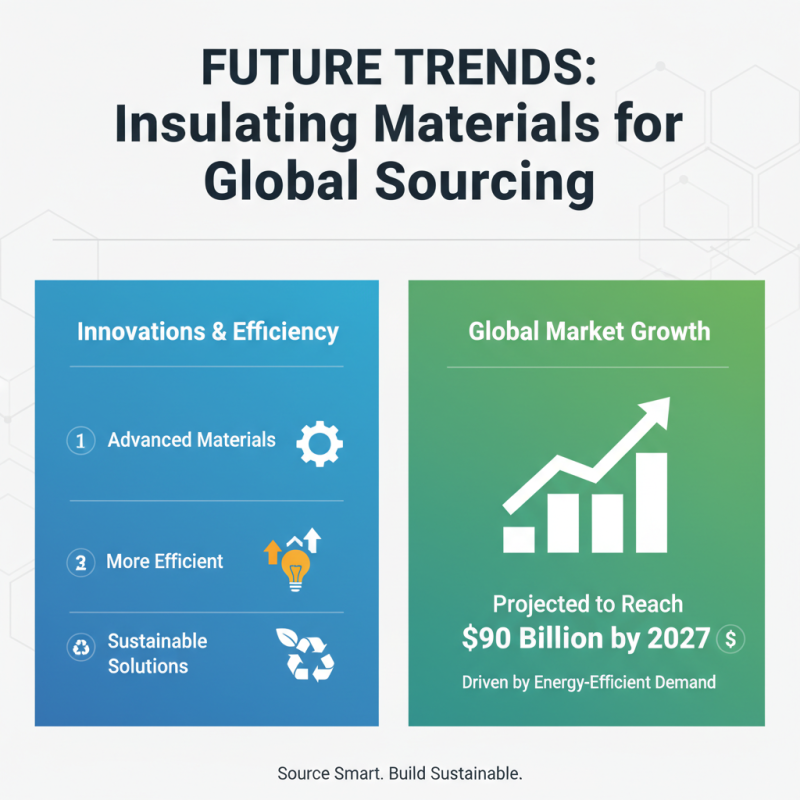
When it comes to global sourcing, selecting the right insulating materials is crucial for efficiency. Insulating materials play a vital role in various industries, affecting energy consumption and system performance. According to the 2022 Global Insulation Market Report, the demand for advanced insulating materials is projected to grow at a rate of 6% annually, reflecting their importance in energy-saving initiatives.
Polyurethane foam is a leading insulation choice due to its high thermal resistance and lightweight properties. It can reduce energy costs by up to 30%. Another innovative material, Aerogel, offers remarkable insulating performance with minimal weight. Its thermal conductivity is significantly lower than traditional materials, which is why it garners attention in high-tech applications. These materials showcase how technological advancements can lead to greater efficiency yet pose challenges in sourcing due to their costs.
Mineral wool remains a staple in construction. It provides fire resistance and sound insulation, yet sourcing quality mineral wool may not be straightforward. The industry faces issues with consistency in quality and supply chain limitations. Moving forward, each material has its own strengths and weaknesses. Careful consideration and thorough market research are vital in ensuring that the right materials are chosen for specific applications.
Top 10 Material Insulators for Efficient Global Sourcing
| Rank |
Insulating Material |
Thermal Conductivity (W/m·K) |
Applications |
Cost Effectiveness |
| 1 |
Polyurethane Foam |
0.020 |
Building Insulation, Refrigerators |
High |
| 2 |
Fiberglass |
0.040 |
Attics, Walls, Ducts |
Moderate |
| 3 |
Mineral Wool |
0.035 |
Fireproofing, Soundproofing |
Moderate |
| 4 |
Cellulose |
0.040 |
Recycled Paper, Building Insulation |
High |
| 5 |
Polystyrene |
0.030 |
Foundation, Roof Insulation |
High |
| 6 |
Rockwool |
0.037 |
Industrial Insulation |
Moderate |
| 7 |
Vacuum Insulated Panels |
0.004 |
High-Performance Applications |
Low |
| 8 |
Aerogel |
0.013 |
Space Applications, Pipe Insulation |
Very Low |
| 9 |
Expanded Polystyrene (EPS) |
0.038 |
Food Packaging, Building |
High |
| 10 |
Hemp Insulation |
0.040 |
Eco-Friendly Building |
High |
Comparative Analysis of Thermal Conductivity in Insulating Materials
When selecting insulating materials, thermal conductivity is a crucial parameter. This property determines how well a material resists heat transfer. Various studies reveal that materials like fiberglass and foam have low thermal conductivity, making them effective insulators. For instance, fiberglass typically shows values around 0.04 W/m·K, while closed-cell foam can go as low as 0.022 W/m·K.
In contrast, materials such as concrete or metal exhibit higher thermal conductivity, averaging around 1.5 W/m·K. Choosing the right insulator can significantly impact energy efficiency. The right insulation reduces the energy required for heating and cooling, leading to lower operational costs. However, misconceptions exist. Many believe any insulator will suffice, yet their performance varies widely.
A comparative analysis of these materials highlights the need for careful selection. Insulators with lower thermal conductivity offer superior energy efficiency, yet factors like cost and availability also play roles. It is essential to assess each material's properties and applications before making a decision. Ignoring this analysis can lead to inefficient sourcing decisions.
Top 10 Material Insulators - Comparative Analysis of Thermal Conductivity
Environmental Impact and Sustainability of Top Insulators
When considering the environmental impact and sustainability of material insulators, choices become crucial. Insulators play a significant role in energy efficiency and resource conservation. The right insulation material can reduce energy demands, leading to lower carbon footprints.
Eco-friendly insulators, such as cellulose or sheep's wool, have gained attention. These materials are often made from recycled substances. They can minimize the use of new resources, aligning with sustainable practices. However, their production might still consume energy, reminding us that no material is perfect.
Tips: Look for labels indicating recycled content. Consider the life cycle of the insulation material. Also, research local availability to reduce transportation emissions.
Another notable option is aerogel, known for its impressive insulating properties. It is lightweight and can be produced from abundant silica. Yet, the energy-intensive production process raises concerns. Awareness of the sourcing and processing impact is vital for responsible choices.
Using sustainable insulators isn't just about material choice. Awareness of installation techniques is essential as well. Poor installation can lead to air leakage and reduced effectiveness. This aspect highlights the importance of professional guidance throughout the process.
Cost-Effectiveness and Availability of Leading Insulation Materials
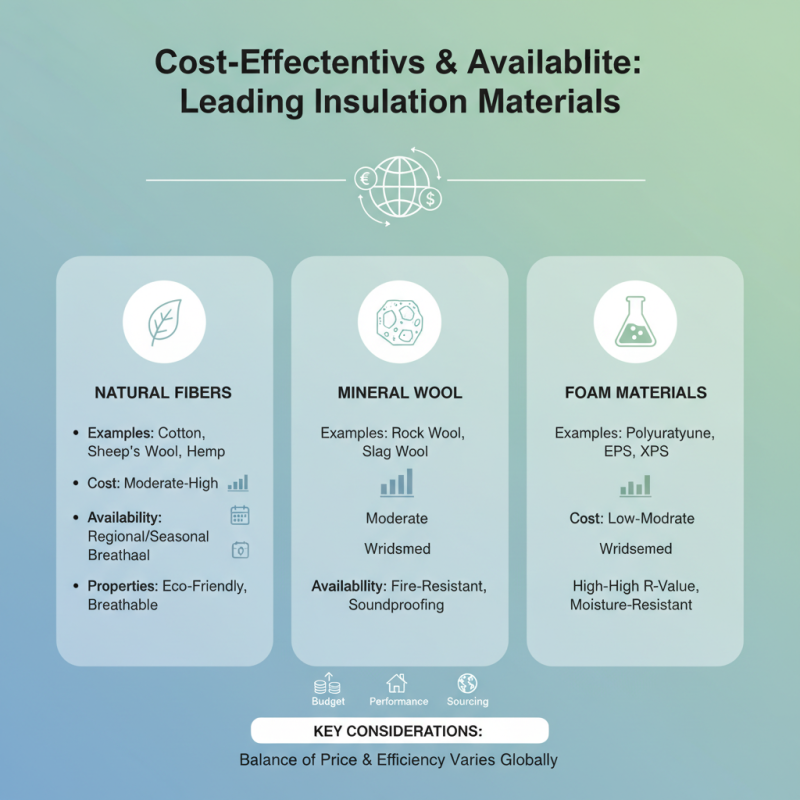
When sourcing insulation materials globally, cost-effectiveness plays a critical role. The most efficient insulators often strike a balance between performance and price. Many manufacturers are exploring natural fibers, mineral wool, and foam materials. These options have unique properties but varying costs. This variability can affect overall project budgets.
Availability is another key factor. Some materials, like cellulose or fiberglass, are widely produced and readily accessible across different regions. Others may face supply chain issues due to environmental regulations or sourcing difficulties. Thus, your selection may be limited based on location. A careful assessment of local suppliers can ensure timely delivery and cost savings.
However, not all choices are straightforward. Long-term performance and environmental impact should also be considered. While some insulators are cheaper upfront, their efficiency may decline over time. This may lead to increased energy costs and frequent replacements. Balancing immediate savings against future expenses requires reflection and strategic planning.