Essential Tips for Choosing Switchgear Insulators for Your Needs?
When selecting Switchgear Insulators, it is crucial to consider different factors that can affect their performance. Renowned industry expert Dr. Emily Hart, a leading electrical engineer, emphasizes, "Choosing the right insulator is key to ensuring system reliability." This insight underscores the importance of making informed decisions.
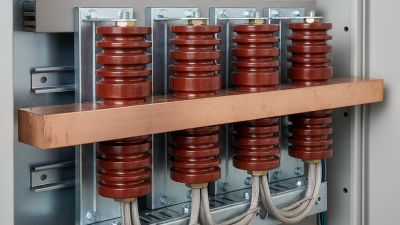
Switchgear Insulators play an essential role in electrical systems. They provide electrical isolation and withstand environmental stresses. A poorly chosen insulator can lead to system failures or outages. The right material and design can enhance durability while reducing maintenance costs.
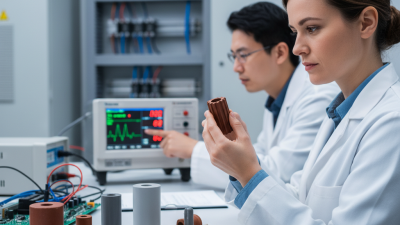
Consulting with professionals can help navigate the selection process. Hands-on experience in installations can reveal overlooked challenges. Real-world examples of insulator failure prompt critical reflection on choices. Understanding your specific needs will lead to effective solutions in the long run.

Understanding the Role of Switchgear Insulators in Electrical Systems
Switchgear insulators play a crucial role in maintaining the integrity of electrical systems. They provide electrical isolation, preventing unintended conduction and ensuring the safety of equipment. Proper selection of insulators is key to reliable operation. Different materials, such as porcelain or composite, have varying strengths and thermal ratings. Selecting the right type for specific applications is vital.
Understanding the environmental conditions is crucial. High humidity, pollution, and temperature fluctuations can affect an insulator's performance. For example, insulators in coastal areas may require special coatings to resist corrosion from saltwater. This awareness aids in making informed decisions, significantly impacting long-term reliability.
It is also important to consider installation and maintenance. Improper installation can lead to premature failure. Regular inspections help identify wear or damage. However, even with routine checks, unpredictable factors can cause issues. Experience in managing these risks is invaluable for system operators and engineers. Balancing cost with performance and durability can be challenging, yet decisions must be made carefully to ensure safety and efficiency in electrical systems.
Essential Tips for Choosing Switchgear Insulators for Your Needs
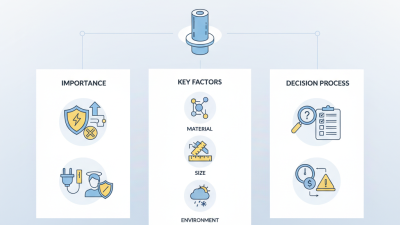
This chart illustrates the important factors to consider when selecting switchgear insulators, highlighting their significance in ensuring reliable electrical system performance.
Key Factors to Consider When Selecting Switchgear Insulators
When selecting switchgear insulators, several key factors are essential. The operating voltage is crucial. Higher voltage requires more robust materials.
Insulators must withstand environmental challenges like moisture and pollution. Factors such as temperature and humidity play significant roles in material selection.
Consider the material type; ceramic and polymer insulators come with different benefits.
Ceramic insulators are durable and reliable. However, they can be heavy and brittle.
On the other hand, polymer insulators are lightweight and resistant to cracking, but they may degrade over time.
Tips for choosing the right insulator include understanding your specific application needs.
Analyze the mechanical strength and electrical properties required. Inspect certification and testing standards; ensure that the insulator meets industry benchmarks.
Lastly, consult with professionals in the field. Their expertise can guide you in making informed choices. Each of these factors should be carefully weighed.
The right insulator can significantly impact the longevity and efficiency of your switchgear system.
Types of Insulators and Their Applications in Switchgear
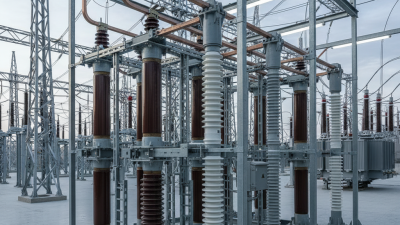
When selecting switchgear insulators, understanding different types is crucial. Porcelain and glass insulators are traditional options known for their durability.
Porcelain insulators can withstand harsh weather, making them ideal for outdoor applications. Glass insulators, while also weather-resistant, offer excellent visibility for monitoring wear and tear.
Polymeric insulators have gained traction recently. They are lightweight and resist pollution better than traditional materials. The International Electrotechnical Commission (IEC) reports that these insulators can extend the maintenance interval by as much as 50%. This aspect alone may influence decision-making. However, users should consider their long-term performance compared to traditional materials.
The selection process is not always straightforward. Factors like environmental conditions, voltage levels, and installation location play a vital role. Data shows that up to 30% of switchgear failures are linked to inadequate insulator choice. Therefore, making informed choices based on reliability and specific application needs is fundamental. Balancing cost, longevity, and environmental compatibility can be challenging but is essential for optimum performance.
Evaluating Material Properties for Optimal Insulator Performance
Choosing the right switchgear insulators requires careful evaluation of material properties. Insulators must withstand electrical stress, temperature fluctuations, and environmental conditions. According to the IEEE, the dielectric strength of materials like porcelain and glass can reach up to 30 kV/mm. Understanding these properties ensures optimal performance and longevity.
Tip: Always assess the mechanical strength of insulator materials. High-impact resistance is crucial for outdoor applications. For instance, composite insulators often provide better resilience against harsh weather compared to traditional materials. The IEC standards suggest that material selection should prioritize both dielectric performance and mechanical durability for effective insulation.
Consider the environmental impact on insulator performance. Factors such as pollution and humidity significantly affect insulation effectiveness. Industry reports indicate that insulators in coastal areas need to be more resistant to salt spray corrosion. This means that even small changes in environment can lead to significant performance variations, necessitating regular evaluations for maintenance.
Essential Tips for Choosing Switchgear Insulators for Your Needs
| Material Type |
Mechanical Strength (MPa) |
Thermal Resistance (°C) |
Electrical Strength (kV/mm) |
Chemical Resistance |
| Porcelain |
80 |
150 |
25 |
Excellent |
| Polymer |
60 |
120 |
30 |
Good |
| Glass |
70 |
200 |
20 |
Very Good |
| Composite |
75 |
180 |
27 |
Good |
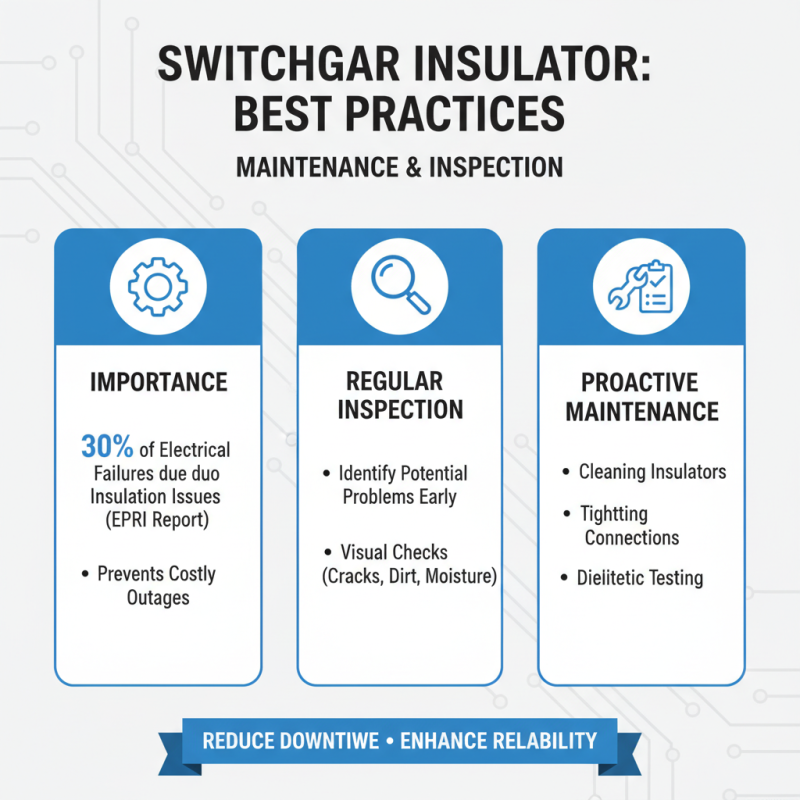
Maintenance and Inspection Best Practices for Switchgear Insulators
When it comes to switchgear insulators, regular maintenance and inspection are crucial. According to a report by the Electric Power Research Institute (EPRI), around 30% of electrical failures can be traced back to insulation issues. This highlights the need for proactive management of insulation systems. Regular inspection ensures that potential problems are identified early, preventing costly outages.
Inspect insulators visually for signs of wear or damage. Cracks, discoloration, or surface contamination can indicate insulation degradation. It is advisable to conduct thermal imaging surveys every year. These surveys help pinpoint hot spots that might signal impending failure. This practice aligns with findings from the International Electrotechnical Commission (IEC), emphasizing the importance of thermal monitoring.
Consider implementing a standardized maintenance routine. Documentation is key. Keeping thorough records allows for better assessment of an insulator's performance. It helps identify trends over time. Ensure that maintenance staff is well-trained. They should be familiar with common issues and troubleshooting techniques to enhance reliability. Don't overlook the environmental factors affecting insulators. Pollution and moisture can significantly impact their lifespan. Regular cleaning and sealing can mitigate these effects.