How to Choose the Right Switchgear Insulators for Your Needs?
Choosing the right switchgear insulators is crucial for ensuring the reliability and safety of electrical systems. John Smith, a leading expert in the switchgear industry, once said, "The right choice of insulator can prevent unforeseen failures and enhance system durability." His words highlight the importance of making informed decisions in selecting switchgear insulators.
Switchgear insulators serve as a vital link between electrical components and their environments. They protect against electrical faults and ensure proper functioning. Various factors influence the selection process, such as voltage levels, environmental conditions, and materials.
A misstep in selection may lead to higher maintenance costs or even system failures. Thus, it is critical to understand the specific requirements of your electrical system. Reflecting on these aspects can significantly impact the long-term performance of your switchgear.
Understanding Switchgear Insulators and Their Functions
Switchgear insulators play a vital role in maintaining the reliability of electrical systems. They protect live components from ground faults and environmental factors. Insulators effectively prevent current leakage, which is crucial in high-voltage applications. For instance, a study by the International Electrotechnical Commission reveals that improper insulation can cause failures, leading to significant financial losses, with outage costs reaching up to $300,000 per hour.
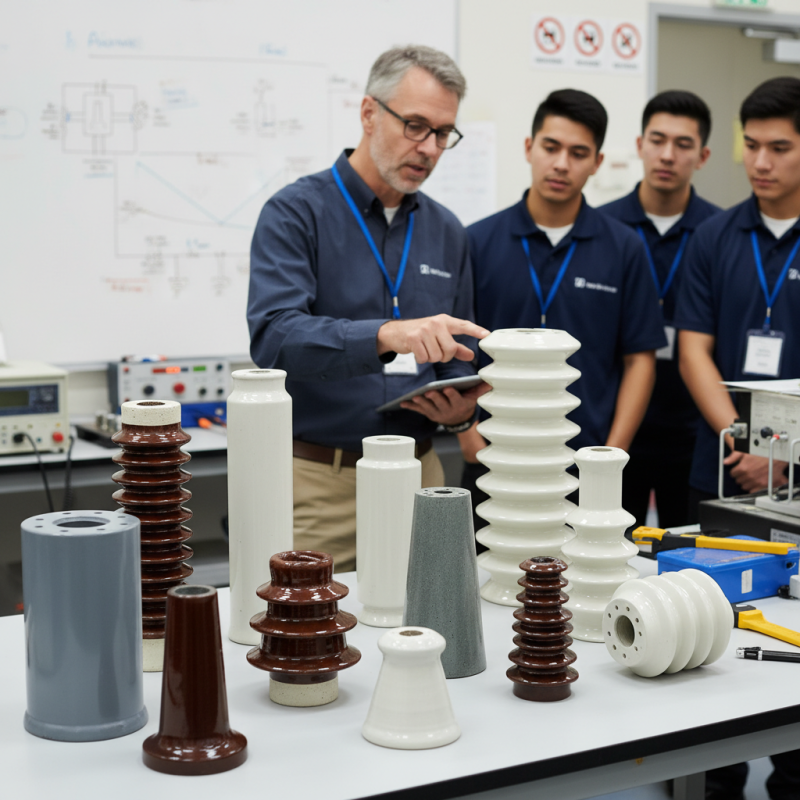
Different types of insulators, such as porcelain and composite, have unique advantages. Porcelain insulators are known for their durability and thermal resistance. They are ideal for harsh environments. On the other hand, composite insulators are lighter and often preferred in applications with high mechanical stress. However, there are reports suggesting that composite materials might deteriorate faster under UV exposure. This aspect should not be overlooked when making a choice.
Choosing the right insulator requires careful analysis. Factors like voltage level, environmental conditions, and installation location all influence the decision. An inadequate match can lead to frequent maintenance issues, ultimately affecting system performance. The right selection is not merely about cost; it’s about long-term reliability and safety in electrical infrastructure.
Types of Switchgear Insulators and Their Applications
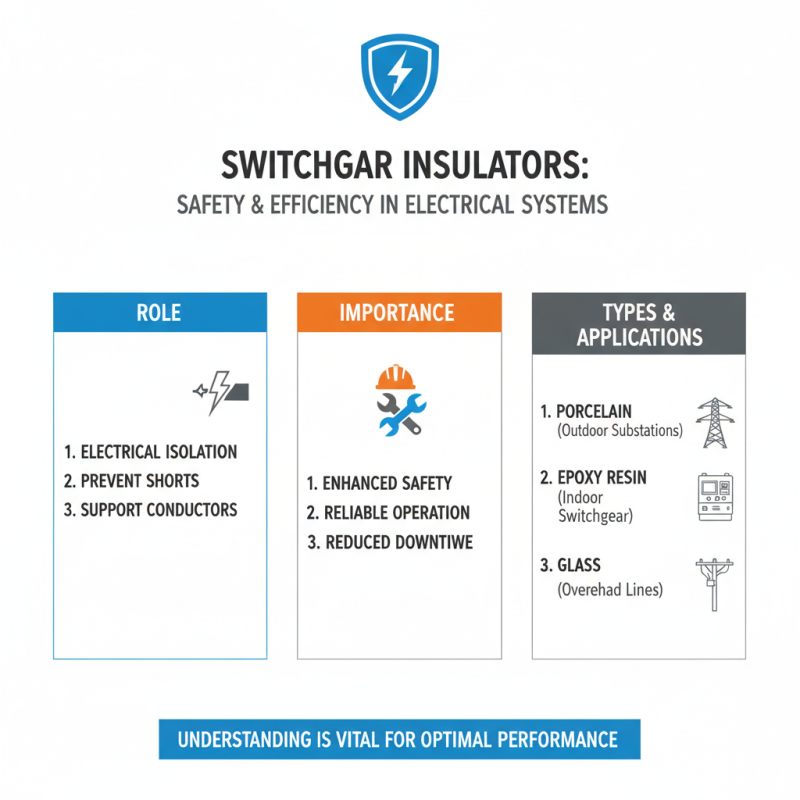
Switchgear insulators play a crucial role in electrical systems. They are essential for ensuring safety and efficiency. Various types of insulators suit different applications, so understanding them is vital.
Porcelain insulators are well-known for their durability. They resist harsh environmental conditions, making them suitable for outdoor applications. However, they can be heavy and may break under extreme impact. Glass insulators are another option. Known for their high insulation strength, they can be visually assessed for defects, which is a major advantage. Yet, they can shatter easily, creating safety concerns.
Polymer insulators have gained popularity due to their lightweight and flexible design. They are less prone to breakage and have good resistance to flashover. Despite these benefits, they may degrade faster under intense UV exposure. Understanding these details helps in making informed choices for specific needs. Every type has pros and cons. Always consider the specific application requirements before deciding.
Key Factors to Consider When Selecting Insulators
Choosing the right switchgear insulators is crucial for optimal performance. One key factor is the insulating material. Options range from porcelain to composite materials. Each has its own strengths. Porcelain is durable, but it can be heavy. Composite materials are lighter and resist environmental damage. However, they may wear out faster under harsh conditions.
Another important aspect is voltage rating. Insulators must withstand the specific voltage in your application. Selecting an insufficient rating can lead to failures. Environmental factors also play a role. Pollution, humidity, and temperature variations can affect the insulator's performance. Regular maintenance is often needed to assess their condition, which can be overlooked.
Lastly, consider the installation environment. Indoor and outdoor installations have different requirements. A common mistake is choosing a type suitable for one environment but used in another. This can lead to early failures and costly replacements. Assessing these factors can significantly affect your overall system reliability and safety.
Evaluating Material Options for Switchgear Insulators
When selecting insulators for switchgear, material choice plays a critical role. Generally, three main materials are utilized: porcelain, glass, and polymer. Each material has unique properties. For example, porcelain insulators offer excellent durability and high resistance to electrical stress. However, they can be heavy and fragile. On the other hand, glass insulators provide superior visibility and tracking resistance. Yet, their fragility in certain conditions raises concerns.
Polymer insulators gained popularity for their lightweight and robust nature. A report from the International Electrotechnical Commission states that polymer insulators reduce installation costs by about 20%, primarily due to their ease of handling. However, they might not perform well in extreme temperatures or UV exposure without proper additives. Evaluating the environmental conditions is crucial before making a decision.
While all these materials have benefits, they also come with drawbacks. Many industry professionals have reported insulation failures due to inappropriate material choices, highlighting the need for thorough evaluation. The choice of insulator impacts not only performance but also long-term maintenance expenses, thus requiring careful consideration.
How to Choose the Right Switchgear Insulators for Your Needs? - Evaluating Material Options for Switchgear Insulators
| Material |
Dielectric Strength (kV/mm) |
Thermal Stability (°C) |
Chemical Resistance |
Cost (USD per unit) |
| Porcelain |
20-30 |
200 |
Excellent |
20-30 |
| Glass |
15-25 |
300 |
Good |
25-35 |
| Polymer |
10-20 |
180 |
Fair |
15-25 |
| Silicone |
25-35 |
220 |
Excellent |
30-40 |
Best Practices for Installation and Maintenance of Insulators
When installing switchgear insulators, attention to detail is crucial. Proper installation techniques include ensuring alignment and securing connections. A study by the Institute of Electrical and Electronics Engineers (IEEE) indicates that 30% of equipment failures stem from improper installation. Therefore, training personnel and adhering to specified protocols can enhance reliability.
Maintenance should not be overlooked. Regular inspections can identify wear and tear early. Experts recommend looking for signs of erosion or cracks. According to a report from the International Energy Agency (IEA), up to 20% of insulator failures occur due to lack of maintenance. Cleaning insulators regularly is essential to prevent pollution-related issues and prolong their lifespan.
Practicing these guidelines can lead to better performance. Yet, many overlook the importance of environmental factors. Insulators may fail sooner in harsh conditions. Understanding these risks is crucial for effective operation. Consider all potential impacts, and don't let complacency compromise your installation and maintenance efforts.