10 Best Medium Voltage Insulators for Reliable Electrical Performance?
In the realm of electrical engineering, the importance of Medium Voltage Insulators cannot be overstated. According to a recent industry report by MarketsandMarkets, the global medium voltage insulator market is expected to reach $5.6 billion by 2025. These insulators are critical in ensuring the reliability and efficiency of electrical networks. For utilities, the right insulator can significantly affect performance metrics such as capacitance loss and power quality.
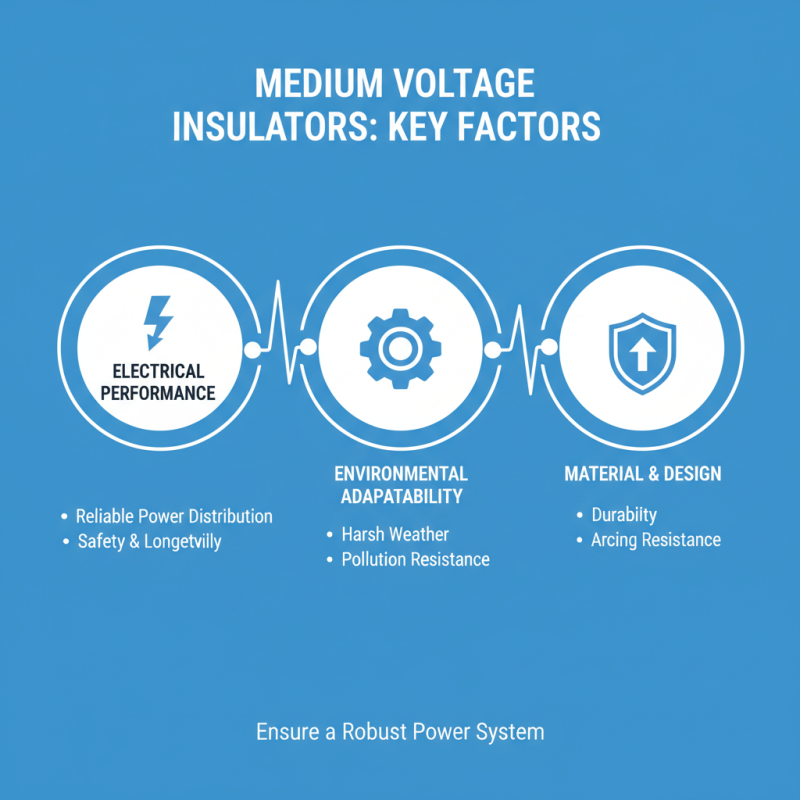
The journey toward selecting the best medium voltage insulators often involves navigating a complex landscape of materials and designs. Insulators must withstand harsh environmental conditions while offering superior dielectric strength. The intricacies of insulation materials, such as porcelain and polymers, affect durability and maintenance needs. Yet, initiatives to improve performance have not eliminated all challenges. Some insulators still suffer from issues like pollution flashover, urging professionals to reevaluate their selections.
As we delve into the ten best medium voltage insulators, it’s essential to consider not only their specifications but also their practical applications. Why do some utilities face persistent reliability issues despite using high-quality insulators? Engaging with these questions can provide valuable insights into optimizing electrical performance and enhancing grid resilience.
Defining Medium Voltage Insulators and Their Importance in Electrical Systems
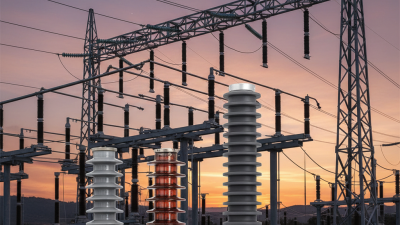
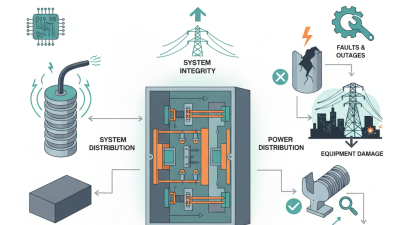
Medium voltage insulators play a crucial role in electrical systems. They help to support and isolate electrical conductors. This prevents unwanted electrical contact that could cause short circuits or outages. The right insulator ensures the stability of power distribution networks.
Understanding the importance of these insulators is vital. They must withstand various environmental conditions. Temperature changes, humidity, and pollution can all affect performance. Insulators should be durable and reliable, especially in harsh environments. A failure in insulation can lead to significant operational issues.
Selecting the best insulator requires careful consideration. Each electrical system has unique requirements. Factors like voltage levels and physical surroundings matter. It’s not enough to choose an insulator based solely on cost. Long-term reliability should be the priority, even if it requires a higher initial investment. Balancing performance and cost is often challenging but necessary.
Common Types of Medium Voltage Insulators Used in Electrical Applications
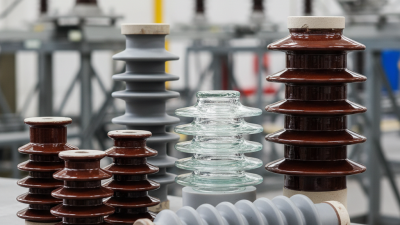
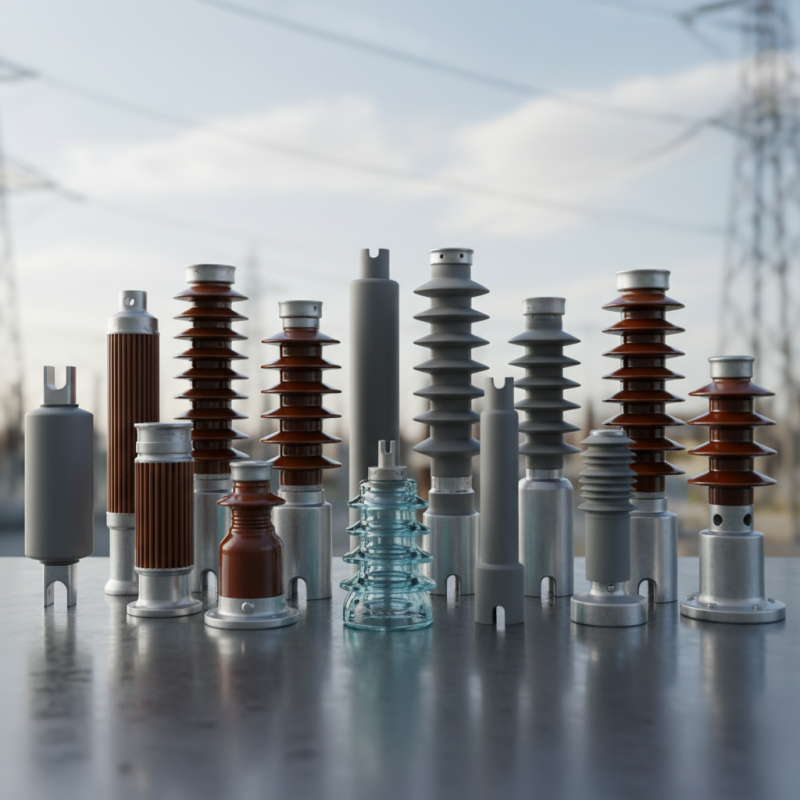
Medium voltage insulators are crucial for maintaining the functionality of electrical systems. They help in isolating conductive parts and protecting equipment from environmental factors. There are a few common types used in various applications. Porcelain insulators are one of the oldest types. They are durable and can withstand harsh weather. However, they can be heavy and brittle, leading to potential challenges during installation.
Another widely used type is composite insulators. These are lighter and often have superior resistance to pollution. They offer excellent mechanical strength. However, their long-term performance is sometimes questioned. Some may degrade faster than expected in extreme conditions. Lastly, glass insulators provide high insulation resistance and can be very effective. Still, they are susceptible to breakage and might not be suitable for all climates.
Selecting the right insulator depends on the specific application. Factors such as environmental conditions, load, and installation method must be considered. It's crucial to assess both benefits and drawbacks. Some decisions may lead to unexpected complications later. Thus, careful planning and evaluation are essential for ensuring reliable electrical performance.
10 Best Medium Voltage Insulators for Reliable Electrical Performance
| Insulator Type |
Material |
Voltage Rating (kV) |
Application |
Key Features |
| Pin Insulator |
Porcelain |
15 |
Distribution Lines |
High mechanical strength, corrosion resistant |
| Suspension Insulator |
Composite |
33 |
Transmission Lines |
Lightweight, self-cleaning |
| Post Insulator |
Glass |
22 |
Switchgear |
Excellent insulation properties, high impact resistance |
| Disc Insulator |
Porcelain |
38 |
Transmission Lines |
High voltage capability, weather resistant |
| Strain Insulator |
Polymer |
15-35 |
Ropeway/Tension Lines |
High flexibility, lightweight |
| Bushing Insulator |
Composite |
15-36 |
Transformers |
Robust design, versatile applications |
| Saddle Insulator |
Porcelain |
20 |
Line Connections |
Durable under heavy loads, good electrical performance |
| Crossarm Insulator |
Glass |
15-25 |
Distribution Networks |
High transparency, long lifespan |
| Cap and Pin Insulator |
Ceramic |
13-33 |
Rail and Tramways |
Strong, high durability |
| Composite Insulator |
EPDM Rubber |
15-36 |
Utility Lines |
Weatherproof, lighter than porcelain |
Key Factors to Consider When Selecting Medium Voltage Insulators
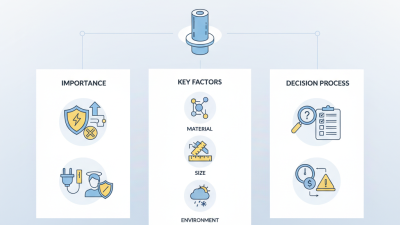
When selecting medium voltage insulators, several key factors warrant careful consideration. Material type plays a crucial role. Common materials include silicone, porcelain, and glass. Each has unique electrical and mechanical properties. For instance, silicone insulators excel in hydrophobicity and pollution resistance. Reports show that silicone insulators can reduce the risk of failure by up to 30% in polluted environments.
Voltage rating is equally important. Insulators must handle voltage spikes without breaking down. The standard voltage range for medium voltage insulators typically falls between 1kV and 35kV. Choosing the right voltage rating ensures reliability and safety.
Additionally, environmental factors must not be overlooked. Temperature fluctuations, humidity levels, and UV exposure can impact insulator performance. Studies highlight that temperature variations can lead to material degradation over time. Regular inspection is crucial for ensuring long-term reliability.
The installation process is another critical aspect. Poor installation practices can negate the benefits of high-quality insulators. Many failures stem from improper fitting or alignment. Continuous training for installation crews may address this issue. Striving for improvement in these areas enhances overall system performance.
Maintenance Tips for Ensuring Longevity of Medium Voltage Insulators
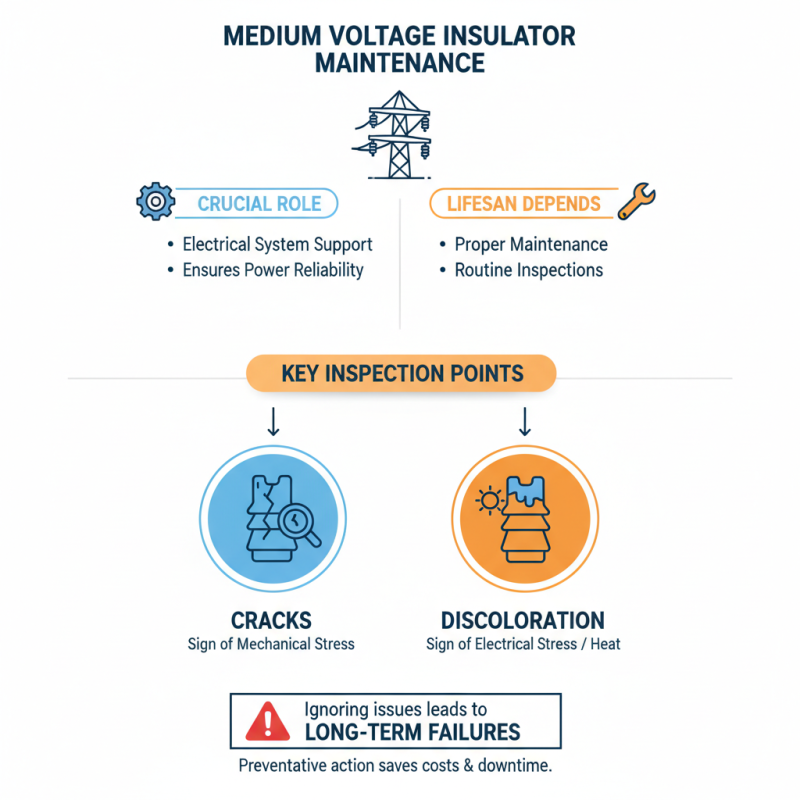
Medium voltage insulators play a crucial role in electrical systems. Their longevity heavily depends on proper maintenance. Routine inspections are vital. Look for signs of wear, such as cracks or discoloration. These issues can indicate stress, leading to failures in the long run.
Cleaning insulators is another essential task. Dust and pollutants can accumulate, affecting their performance. Use soft brushes or cloths to avoid scratching the surface. Make sure to follow safety protocols while working at heights. Moisture management also matters. Inspect for any leaks or water accumulation, as these can lead to corrosion or shorts.
In extreme weather, insulators may face additional challenges. Insulation materials can degrade faster in high temperatures or high humidity. Periodic checks during these conditions can help. Consider using protective coatings as a proactive measure. They can enhance the insulator’s resistance to environmental factors, extending its life. Think about these maintenance tips seriously. They can be the difference between early replacement and a longer lifespan for your medium voltage system.